
How Long Does a Roof Last On Average?
A roof lasts 20 to 50 years on average, with the exact lifespan depending on material, installation quality, and local climate. Asphalt shingles, used on roughly 80% of US homes according to the National Association of Home Builders (NAHB), average 22 years, while premium materials such as slate, clay tile, and copper exceed 75 years.
Lifespan depends on two measurements: manufacturer warranty and actual service life. A 30-year asphalt shingle warranty covers material defects under controlled conditions, but real-world service life often falls 5 to 10 years shorter due to UV exposure, hailstorms, and improper attic ventilation. The International Association of Certified Home Inspectors (InterNACHI) confirms that proper ventilation and annual inspections extend roof life by 15% to 25% across all material types.
Roof Lifespan By Material (Comparison Table)
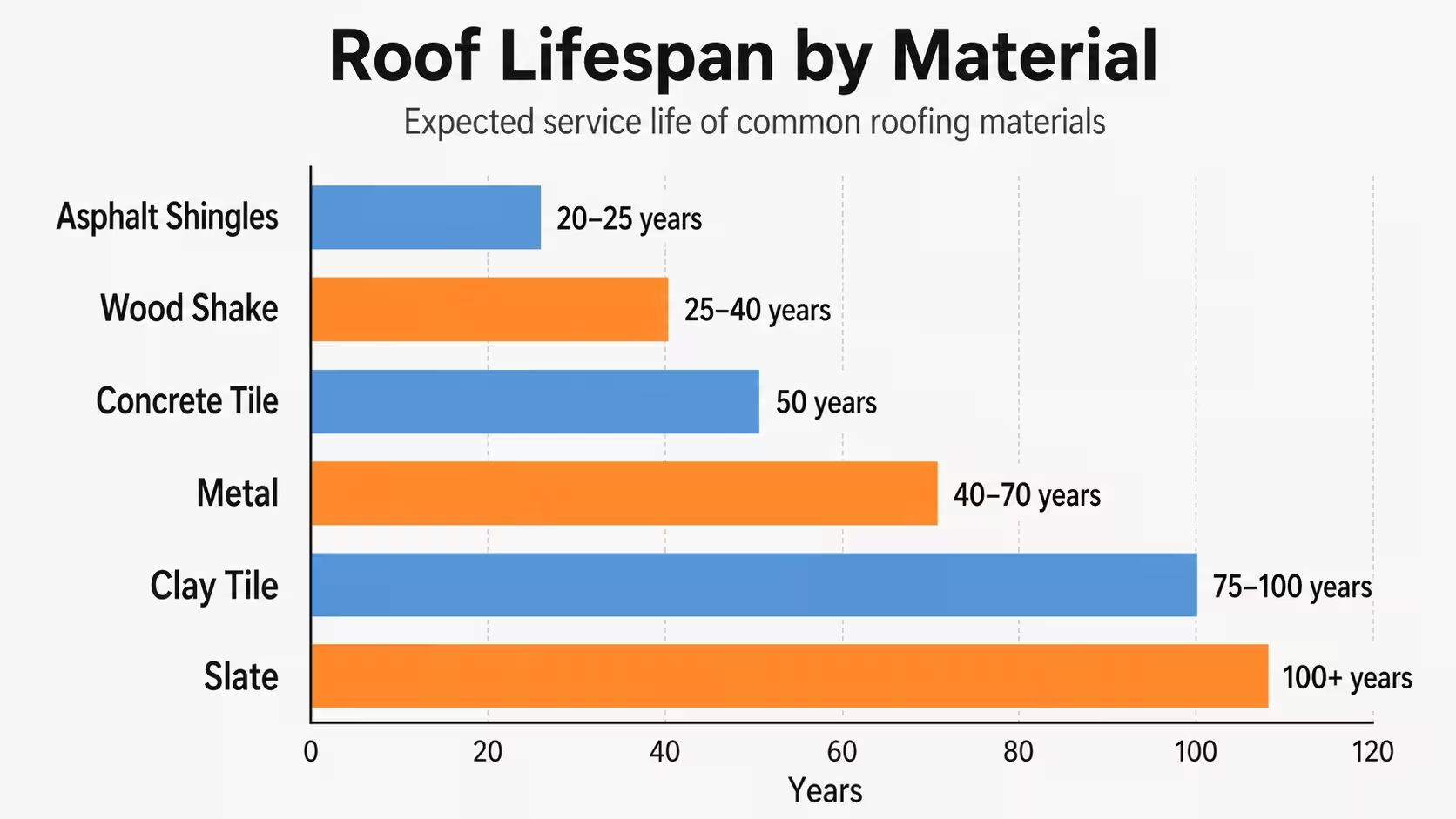
The following table compares the average lifespan, maximum lifespan, and cost range of 8 common roof materials. Slate ranks as the longest lasting option at 100 to 200 years, while standard 3-tab asphalt shingles sit at the shorter end with 15 to 20 years.
| Material | Average Lifespan | Max Lifespan | Cost Range (per sq. ft. installed) |
|---|---|---|---|
| 3-Tab Asphalt Shingle | 15 to 20 years | 25 years | $3.50 to $5.50 |
| Architectural Shingle | 25 to 30 years | 35 years | $4.50 to $7.50 |
| Premium Shingle | 30 to 50 years | 50 years | $7.00 to $12.00 |
| Metal (Steel/Aluminum) | 40 to 70 years | 80 years | $9.00 to $16.00 |
| Wood Shake (Cedar) | 25 to 30 years | 40 years | $7.00 to $13.00 |
| Concrete Tile | 50 years | 75 years | $11.00 to $20.00 |
| Clay Tile | 75 to 100 years | 150 years | $12.00 to $25.00 |
| Natural Slate | 100 to 150 years | 200 years | $20.00 to $40.00 |
How Long Does an Asphalt Shingle Roof Last?
An asphalt shingle roof lasts 15 to 50 years, depending on the shingle grade and regional climate. The Asphalt Roofing Manufacturers Association (ARMA) divides asphalt shingles into 3 grades, each with its own service life:
- 3-tab shingles last 15 to 20 years. The thinnest and lightest option (around 50 lbs per square), they wear fastest in hot, sunny climates such as Arizona and Texas, where UV degradation can shorten life by 3 to 5 years.
- Architectural (dimensional) shingles last 25 to 30 years. Built with 2 bonded layers and weighing roughly 240 to 340 lbs per square, they handle wind speeds up to 130 mph and resist granule loss better than 3-tab.
- Premium (designer/luxury) shingles last 30 to 50 years. Examples such as GAF Grand Sequoia, CertainTeed Grand Manor, and Owens Corning Berkshire mimic slate or wood shake aesthetics and carry 50-year limited warranties.
Hailstorms larger than 1 inch can cut shingle life by 40%, while heavy snow loads above 30 lbs per square foot accelerate granule shedding. Annual inspection extends asphalt shingle life by 5 to 7 years across all 3 grades.
How Long Does a Metal Roof Last?
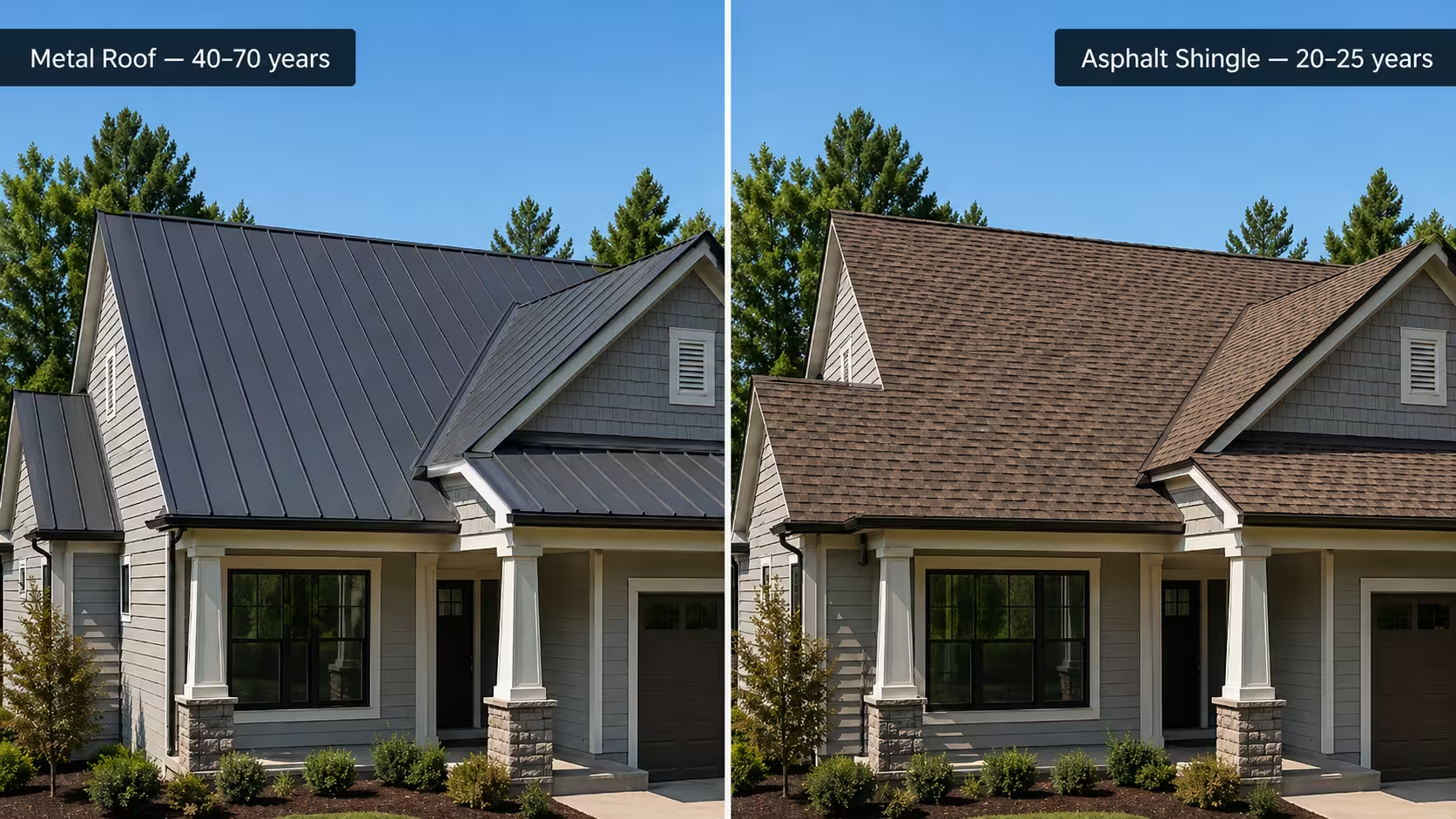
A metal roof lasts 40 to 100+ years, with the exact lifespan determined by the metal type and protective coating. The Metal Roofing Alliance (MRA) reports that properly installed metal roofs outlast asphalt shingles by a factor of 2 to 3.
| Metal Type | Lifespan | Notes |
|---|---|---|
| Steel (Galvanized) | 40 to 60 years | Coated with zinc. Rusts in coastal salt-air zones within 25 to 30 years |
| Steel (Galvalume) | 50 to 70 years | Zinc + aluminum coating, resists corrosion 4x better than galvanized |
| Aluminum | 50 to 70 years | Best for coastal homes. Immune to salt corrosion |
| Copper | 100 to 200 years | Develops protective patina. Used on landmark buildings such as the Statue of Liberty |
| Zinc | 80 to 100 years | Self-healing patina. Common in European architecture |
Coating type also affects metal roof lifespan. Kynar 500 (PVDF) finishes maintain color and integrity for 40+ years, while standard polyester coatings fade within 10 to 15 years. Coastal humidity in regions such as Florida and the Gulf Coast reduces galvanized steel life by 20% to 30%, so aluminum or Galvalume is the better choice in those zones.
For a comparison of cost, aesthetics, and energy efficiency, see our asphalt shingle vs metal roof comparison.
How Long Does a Tile Roof Last?
A tile roof lasts 50 to 150 years, with clay tile outlasting concrete tile by roughly 2 to 1. Clay tile, used on Spanish, Mediterranean, and Mission-style homes, lasts 75 to 150 years, while concrete tile averages 50 years according to the Tile Roofing Industry Alliance (TRIA).
The underlayment beneath the tiles, typically asphalt-saturated felt or synthetic membrane, lasts only 20 to 30 years and requires replacement well before the tiles themselves fail. Homeowners in Phoenix, Miami, and Los Angeles often discover this when leaks appear at year 25 despite intact tiles. In humid or coastal climates, underlayment may need replacement at year 18 to 20 due to accelerated UV and moisture exposure. Tile itself withstands wind speeds up to 150 mph and remains non-combustible (Class A fire rating), which is why it is standard in California wildfire zones.
How Long Does a Wood Shake Or Shingle Roof Last?
A wood shake or shingle roof lasts 25 to 40 years, with cedar (Western Red Cedar and Alaskan Yellow Cedar) being the most durable species. The Cedar Shake & Shingle Bureau (CSSB) certifies premium-grade cedar shakes for a 30-year service life under proper conditions.
Wood roofing requires the highest maintenance commitment of all common materials: annual moss treatment, biennial cleaning, and fungicide application every 4 to 5 years. In humid regions such as the Pacific Northwest and southeastern United States, wood roofs face mold, mildew, and insect risks that can shorten life to 15 to 20 years without active care. Many insurance carriers in California and Colorado either restrict or surcharge wood roof coverage due to wildfire risk, since untreated cedar carries a Class C fire rating.
How Long Does a Slate Roof Last?
A slate roof lasts 75 to 200 years. That is the longest of any commercially available roofing material. Natural slate quarried in Vermont, Pennsylvania, and Wales (Penrhyn slate) routinely lasts 150 years, while Spanish black slate averages 100 years according to the National Slate Association (NSA).
Synthetic slate, manufactured from recycled rubber and plastic composites by brands such as DaVinci Roofscapes and EcoStar, lasts 40 to 50 years at roughly 25% to 30% of natural slate's installed cost. The cost-to-lifespan ratio favors natural slate over a 100-year horizon: $25 per sq. ft. amortized over 150 years equals $0.17 per year, compared to $9 per sq. ft. for synthetic slate amortized over 45 years at $0.20 per year. In freeze-thaw climates such as New England, natural slate's low water absorption rate (under 0.4%) prevents the spalling that limits cheaper materials.
How Long Does a Flat Roof Last?
A flat roof lasts 15 to 30 years, with the lifespan determined by the membrane type and installation quality. Modern single-ply membranes, including TPO, EPDM, and PVC, have replaced older built-up roofing (BUR) systems on most commercial and residential flat roofs since 2005.
| Membrane Type | Lifespan | Best Use |
|---|---|---|
| EPDM (Rubber) | 20 to 30 years | Cold climates. Flexible at temperatures down to -40°F |
| TPO (Thermoplastic) | 15 to 25 years | Hot climates. Reflective white surface reduces cooling load by 20% |
| PVC (Vinyl) | 20 to 30 years | Restaurants and chemical-exposure buildings |
| Modified Bitumen | 15 to 20 years | Low-slope residential additions and garages |
| Built-Up Roofing (BUR) | 15 to 30 years | Older commercial buildings. Multiple asphalt + felt layers |
Pooling water ("ponding") reduces flat roof life by 30% to 50% if it persists for more than 48 hours after rainfall, according to the National Roofing Contractors Association (NRCA). Proper drainage slope (minimum 1/4 inch per foot) and biannual debris removal extend flat roof service life by 5 to 8 years.
Factors That Affect Roof Lifespan
Seven factors affect roof lifespan: climate, slope, ventilation, installation quality, maintenance frequency, surrounding vegetation, and material grade. Each can shift expected lifespan by 10% to 40%, according to InterNACHI inspection data.
- Climate. Hot, sunny regions (Arizona, Nevada, Texas) accelerate UV degradation of asphalt shingles by 20% to 30%, while coastal salt air shortens galvanized steel life by 25%. Heavy snow loads above 30 lbs per square foot stress all materials.
- Roof slope. Steeper slopes (above 6:12 pitch) shed water and snow faster, extending shingle life by 5 to 7 years compared to low-slope roofs (below 4:12 pitch) of the same material.
- Attic ventilation. Proper ventilation (1 sq. ft. of net free area per 150 sq. ft. of attic floor) prevents heat buildup that can raise shingle surface temperatures to 160°F, reducing lifespan by up to 20%.
- Installation quality. A roof installed by a manufacturer-certified contractor (GAF Master Elite, CertainTeed SELECT ShingleMaster, Owens Corning Platinum) lasts 15% to 25% longer than a non-certified install due to correct nailing patterns and flashing detail.
- Maintenance frequency. Annual inspections, gutter cleaning, and prompt minor repairs add 5 to 10 years to any roof's service life across all materials.
- Surrounding vegetation. Overhanging branches, falling leaves, and moss growth trap moisture against shingles and tiles, accelerating granule loss and rot. Trimming branches at least 10 feet from the roof reduces this risk by 60%.
- Material grade. Within every material category (asphalt, metal, tile), premium grades last 30% to 50% longer than entry-level products due to thicker substrates and better protective coatings.
Signs Your Roof Needs Replacement
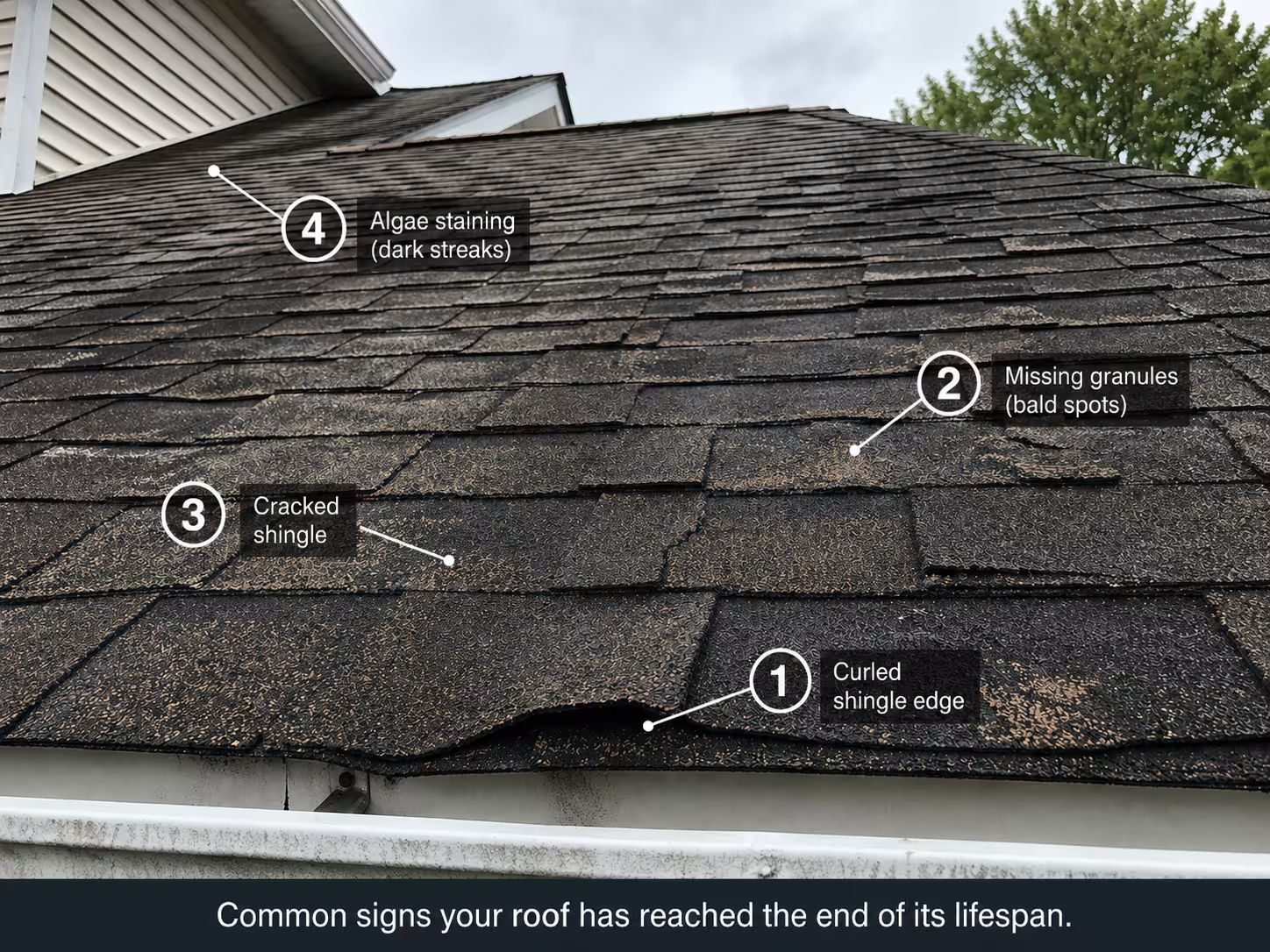
Eight visible signs indicate that roof replacement is needed, based on inspection criteria from the National Roofing Contractors Association (NRCA). Multiple signs appearing together signal that repair is no longer cost-effective.
- Curling or clawing shingle edges. Corners turn upward or downward and expose nail heads, which creates wind uplift entry points. This typically appears at year 15 to 18 on asphalt roofs.
- Bald spots and missing granules. Bare asphalt shows through the ceramic protective layer, and lost granules collect in gutters as black sandy debris. Granule loss above 30% of surface area indicates end-of-life.
- Cracked or broken shingles. Visible splits across shingle faces, common after hailstorms or in roofs older than 20 years.
- Sagging roof deck. Visible dips or wave patterns along the ridge or between rafters point to moisture damage in the wood decking underneath.
- Water stains on ceilings. Brown rings or yellow patches on interior ceilings or upper-floor walls signal active or recent leaks.
- Daylight visible in the attic. Light coming through the roof deck during daytime inspection means there are gaps, missing shingles, or rotted decking.
- Worn ridge or hip caps. Broken, missing, or cracked cap shingles at the roof's peak expose the most vulnerable seam to water entry.
- Flashing damage around penetrations. Rusted, lifted, or sealant-cracked flashing around chimneys, vents, and skylights, often the first failure point on roofs aged 12+ years.
If your roof is approaching the end of its expected lifespan or showing multiple warning signs above, replacement is usually the better long-term choice over repeated repairs. Use our roof replacement cost calculator to get an instant estimate based on your roof size, material, and complexity, with no phone calls or contractor visits required.
How To Extend Your Roof's Lifespan
These 6 maintenance steps extend a roof's lifespan by 5 to 10 years across any material type. The NRCA recommends this sequence as the highest-impact, lowest-cost owner maintenance routine.
- Inspect the roof twice per year, in spring and fall, for curling shingles, cracked flashing, and debris buildup. For accurate area and slope measurements during inspection, see our how to measure a roof guide.
- Clean gutters and downspouts every 6 months to prevent water backup that rots fascia boards and roof edges. Remove leaves, twigs, and granule sediment.
- Trim tree branches within 10 feet of the roof to reduce abrasion, leaf accumulation, and squirrel access. Cut branches in late winter for slowest regrowth.
- Ventilate the attic properly, maintaining 1 sq. ft. of net free vent area per 150 sq. ft. of attic floor, balanced between intake (soffit) and exhaust (ridge) vents.
- Repair minor damage promptly, including cracked sealant, lifted shingles, and small leaks, within 30 days of detection. Delayed repairs increase damage area by 200% to 400% within one rainy season.
- Schedule professional inspection every 3 years, or after any major storm event with hail above 1 inch or wind speeds above 60 mph.
When Should You Replace Vs Repair Your Roof?
Replace your roof when damage covers more than 30% of the surface or the roof has reached 80% of its expected lifespan, and repair it when damage is localized and the roof retains at least 5 years of service life. This "30% rule" comes from contractor cost-benefit analysis published by HomeAdvisor and Angi.
| Condition | Recommended Action | Reason |
|---|---|---|
| 1 to 5 missing shingles, roof under 15 years old | Repair | Localized fix preserves remaining warranty and service life |
| Hail damage on 1 slope, roof 10 to 15 years old | Repair (insurance) | Single-slope replacement covered under most homeowner policies |
| Active leak, roof 18 to 22 years old | Inspect, then decide | Determine if leak source is isolated flashing failure or widespread wear |
| Multiple leaks, roof 20+ years old | Replace | Repair costs exceed 50% of replacement within 3 years |
| Sagging deck or daylight in attic | Replace | Structural damage requires full deck and underlayment replacement |
| Granule loss above 30% of surface | Replace | End-of-life signal. Further repair extends life by under 2 years |
| Storm damage on 60%+ of roof | Replace | Insurance typically covers full replacement above this threshold |
For accurate material quantity estimates before requesting bids, use our roofing calculator to determine squares needed, waste factor, and underlayment requirements.