
Accurate measurements drive six common home projects: flooring, painting, drywall, tile work, baseboards, and wallpaper. The NAHB reports that measurement errors cause 15% to 20% of material overbuying, costing DIY homeowners $200 to $800 per project.
Tools you need to measure a room

You need six tools:
- A 25-foot tape measure for any measurement under 25 feet.
- A laser distance meter for rooms longer than 20 feet, accurate to ±1/16 inch at 50 feet.
- Pencil and paper or a notes app for the floor plan and dimensions.
- A calculator to multiply length by width and sum multiple areas.
- A 12-inch carpenter square to verify 90-degree corners in L-shaped layouts.
- A stud finder to locate studs at 16-inch or 24-inch spacing for drywall projects.
How to measure a room step by step
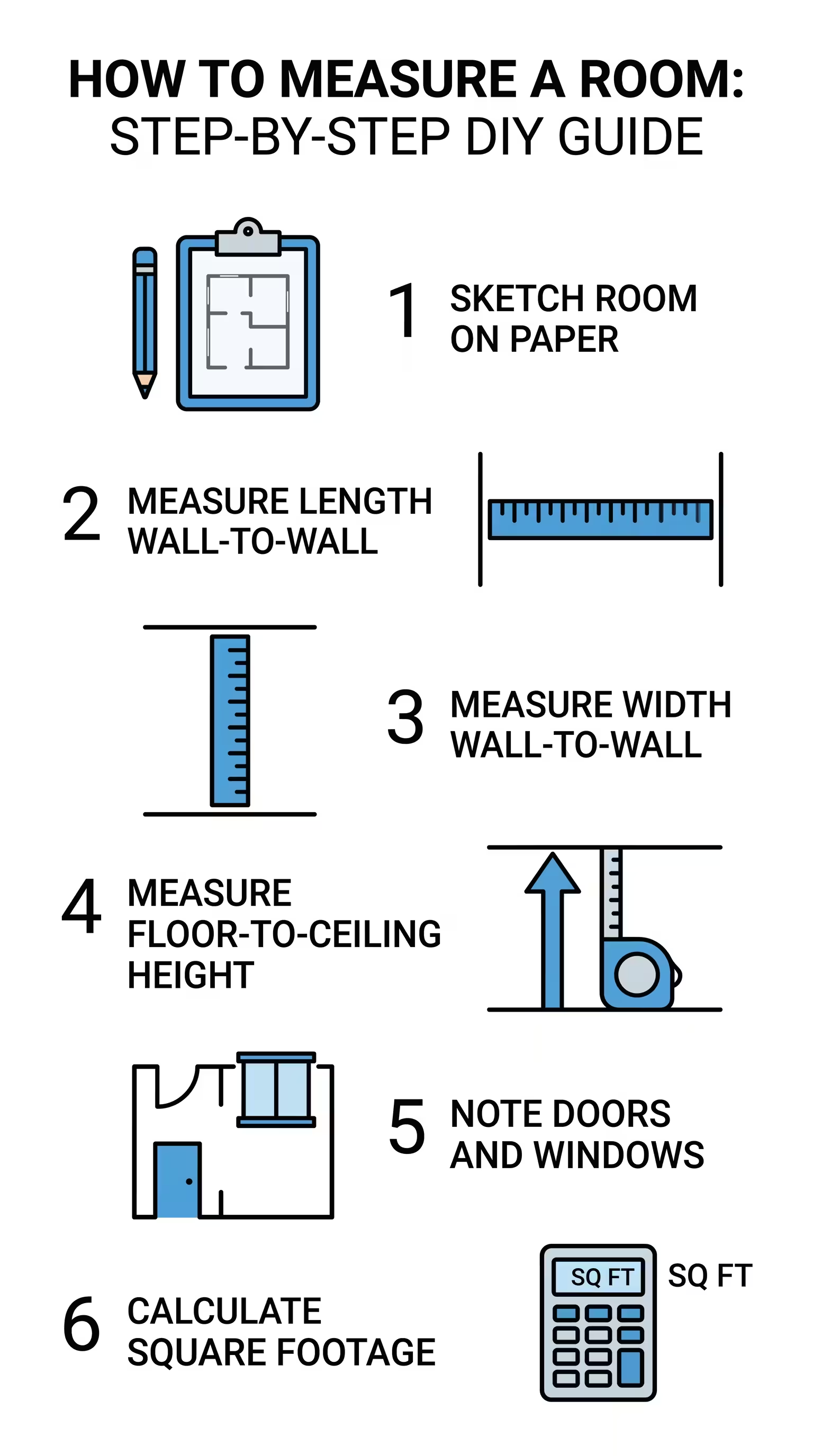
The full process takes 10 to 15 minutes for a standard 168 sq ft bedroom:
- Sketch the floor plan with walls, doors, windows, and closets.
- Measure length at floor level, wall to wall. Avoid baseboards, which add ¾ to 1 inch of error.
- Measure width at floor level using the same wall-to-wall technique.
- Measure height at three points (left corner, middle, right corner) to catch ceiling or floor slope.
- Note door widths (standard 32" or 36"), window dimensions (standard 36" × 60"), and closet sizes.
- Record dimensions in feet and inches, then convert inches to decimal feet (÷12) for calculations.
How to calculate room square footage
The formula is:
Square feet = length (ft) × width (ft)
Example: a living room measuring 15 feet 6 inches by 18 feet.
- Convert 6 inches to 0.5 feet (6 ÷ 12).
- Length becomes 15.5 feet.
- 15.5 × 18 = 279 square feet.
For multiple rooms, calculate each separately, then add the totals. A 3-room project with a 168 sq ft bedroom, 216 sq ft living room, and 60 sq ft bathroom comes to 444 square feet.
You can use our square footage calculator to handle conversions and rounding automatically.
How to measure an irregular or L-shaped room
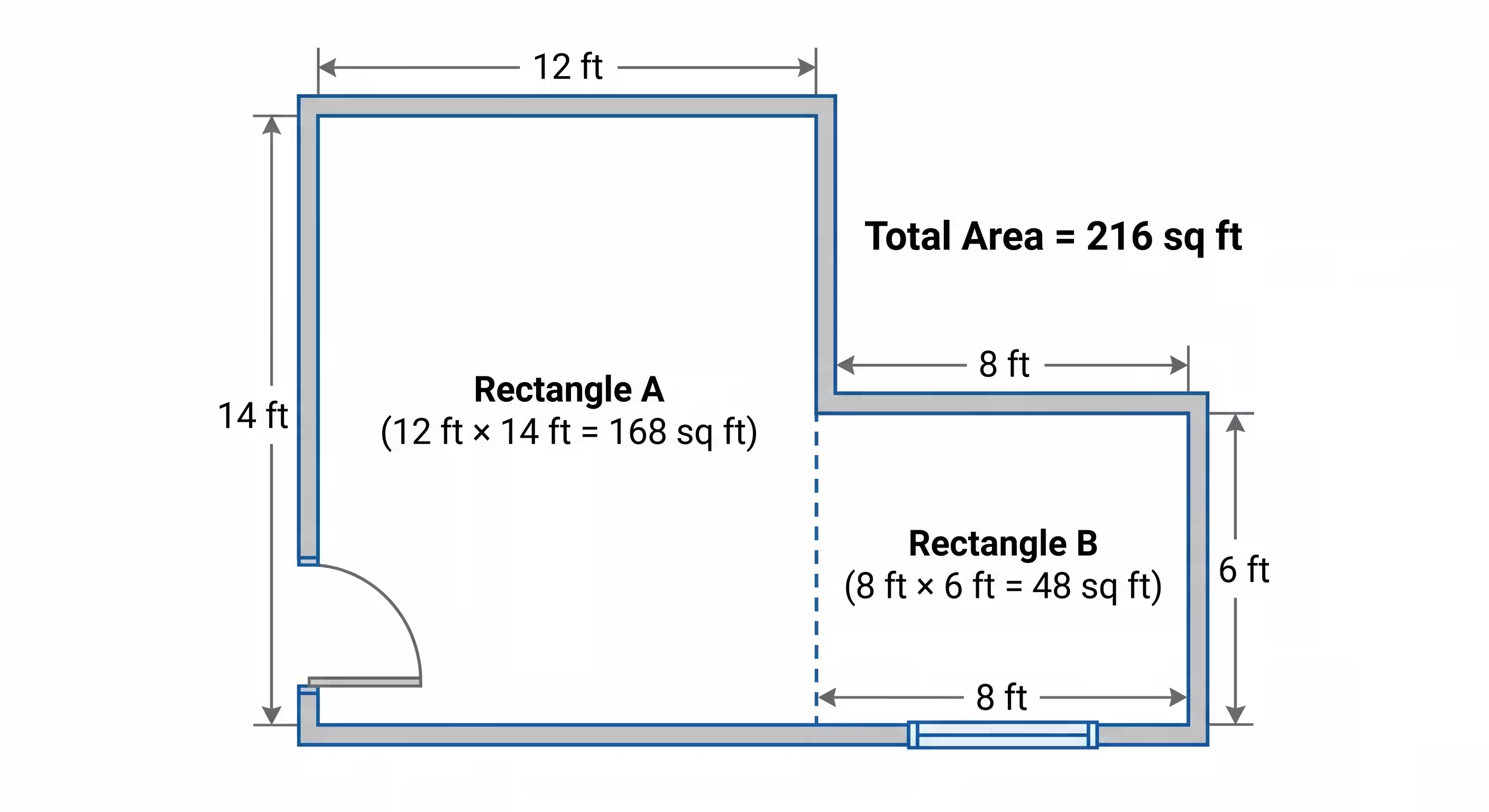
For irregular spaces:
- Divide the floor plan into 2 to 4 rectangles with pencil lines.
- Measure length and width of each rectangle at floor level.
- Calculate each rectangle area (length × width).
- Add all rectangle areas for the total square footage.
Example: an L-shaped living room splits into:
- Main section: 12 ft × 14 ft = 168 sq ft
- Alcove: 6 ft × 8 ft = 48 sq ft
- Total: 216 sq ft
For subtraction cases (a closet carved from a larger room), measure the outer rectangle first, then subtract the cutout area.
How to measure wall height and ceiling height
Wall height determines paint gallons, drywall sheets, and wainscoting linear feet.
Standard US residential heights
- 8-foot ceilings were a common standard in older U.S. homes (source).
- 9-foot ceilings are typical in modern residential construction, offering improved openness compared to older, lower ceilings.
- 10-foot ceilings or higher appear in higher-end or architecturally distinctive homes, where greater height contributes to a more spacious interior (source).
- Vaulted or sloped ceilings: average using (peak height + wall height) ÷ 2.
For paint and drywall, multiply wall height by wall length to get wall square footage. That number sets material quantity at 350 sq ft per gallon of paint and 32 sq ft per standard drywall sheet.
How to measure a room for different home projects
Different projects follow different measurement rules:
| Project | What to measure | What to subtract | Waste factor |
|---|---|---|---|
| Flooring | Floor area (length × width) | Door thresholds, permanent fixtures | 10% |
| Paint | Wall area + ceiling area | Doors, windows | 10% to 15% |
| Drywall | Wall area (length × height per wall) | Doors, windows, outlet cutouts | 10% |
| Tile | Floor or wall area | Permanent fixtures | 15% to 20% |
Flooring
Measure total floor area and subtract door threshold strips (2 to 4 inches wide). Add 10% waste for standard layouts and 15% for diagonal or herringbone patterns. Use the flooring calculator to convert square footage into plank boxes.
Paint
Measure total wall area (length × ceiling height per wall) plus ceiling area (length × width). Subtract 21 sq ft per standard door (3' × 7') and 15 sq ft per window (3' × 5'). The paint calculator converts wall square footage into gallons at 350 sq ft coverage per gallon, with second-coat consideration.
Drywall
Measure wall area using length × height for each wall, then sum all four walls. Subtract door and window openings, plus 6" × 4" for each electrical outlet or switch. The drywall calculator converts footage into 4'×8' sheets (32 sq ft) or 4'×12' sheets (48 sq ft).
Tile
Measure floor area for floor tile or wall area for backsplash and wall tile. Subtract permanent fixtures (toilet: 6 sq ft, vanity: 6 to 12 sq ft, bathtub: 15 sq ft). Add 15% waste for cut tiles and 20% for diagonal or patterned layouts. Use the tile installation cost calculator for cost estimates.
Most real projects mix L-shaped layouts, multiple rooms, door openings, and different waste factors. The square footage calculator handles multiple sections at once and gives totals ready for any project estimate.
Common room size measurements and square footage
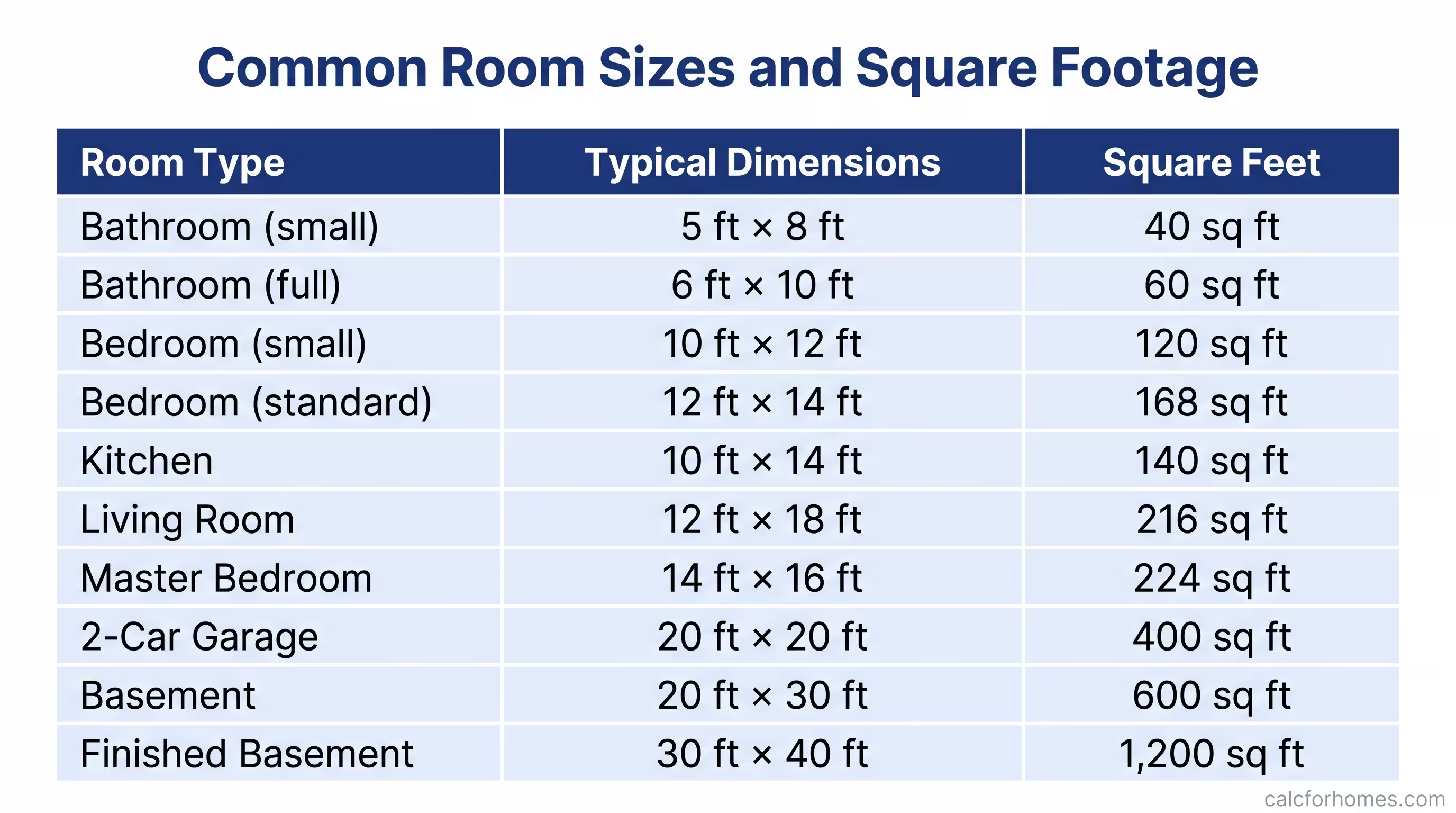
Based on the 2024 NAHB New Home Characteristics Survey:
| Room | Typical dimensions (ft) | Square feet |
|---|---|---|
| Small bathroom | 5 × 8 | 40 |
| Standard bathroom | 6 × 10 | 60 |
| Small bedroom | 10 × 12 | 120 |
| Standard bedroom | 12 × 14 | 168 |
| Master bedroom (small) | 14 × 16 | 224 |
| Master bedroom (large) | 16 × 20 | 320 |
| Kitchen (small) | 10 × 14 | 140 |
| Kitchen (standard) | 12 × 16 | 192 |
| Living room (standard) | 12 × 18 | 216 |
| Living room (large) | 15 × 20 | 300 |
| Garage (2-car) | 20 × 20 | 400 |
| Basement (standard) | 30 × 40 | 1,200 |
Common mistakes when measuring a room
Six errors to avoid, each causing 3% to 15% material error:
- Measuring over baseboards adds ¾ to 1 inch per wall, inflates square footage by 0.5% to 1%, and creates flooring gaps.
- Ignoring door swing cuts usable floor area by 10 to 15 sq ft and changes furniture layout and transitions.
- Skipping closets misses 15 to 40 sq ft of walk-in space and creates material shortages.
- Forgetting inch-to-foot conversion: recording "12 feet 6 inches" as 12 × 6 gives 72 instead of the correct 75, a 4% error.
- Measuring wall height at one point misses floor slope or ceiling drop (½ to 2 inches is common in 30+ year homes) and skews paint estimates.
- Omitting waste factor leaves no margin for cutting errors, pattern matching, or damaged materials.