
This guide covers 6 major home improvement materials: roofing shingles, hardwood flooring, ceramic tile, drywall, composite decking, and carpet. The percentages come from manufacturer installation guidelines published by the National Wood Flooring Association (NWFA), the Tile Council of North America (TCNA), and the Asphalt Roofing Manufacturers Association (ARMA).
Contents
- What Is a Waste Factor?
- Standard Waste Factor Percentages by Material
- Waste Factor for Roofing Shingles
- Waste Factor for Flooring
- Waste Factor for Tile Installation
- Waste Factor for Drywall
- Waste Factor for Decking
- When to Increase the Waste Factor
- How to Calculate Waste Factor Into Your Order
- Common Waste Factor Mistakes to Avoid
- Frequently Asked Questions
What Is a Waste Factor?
A waste factor is the extra percentage of material added to a base quantity to cover cuts, breakage, pattern matching, and installer mistakes. The standard range is 10% to 20%, depending on the material, the layout pattern, and the installer's experience.
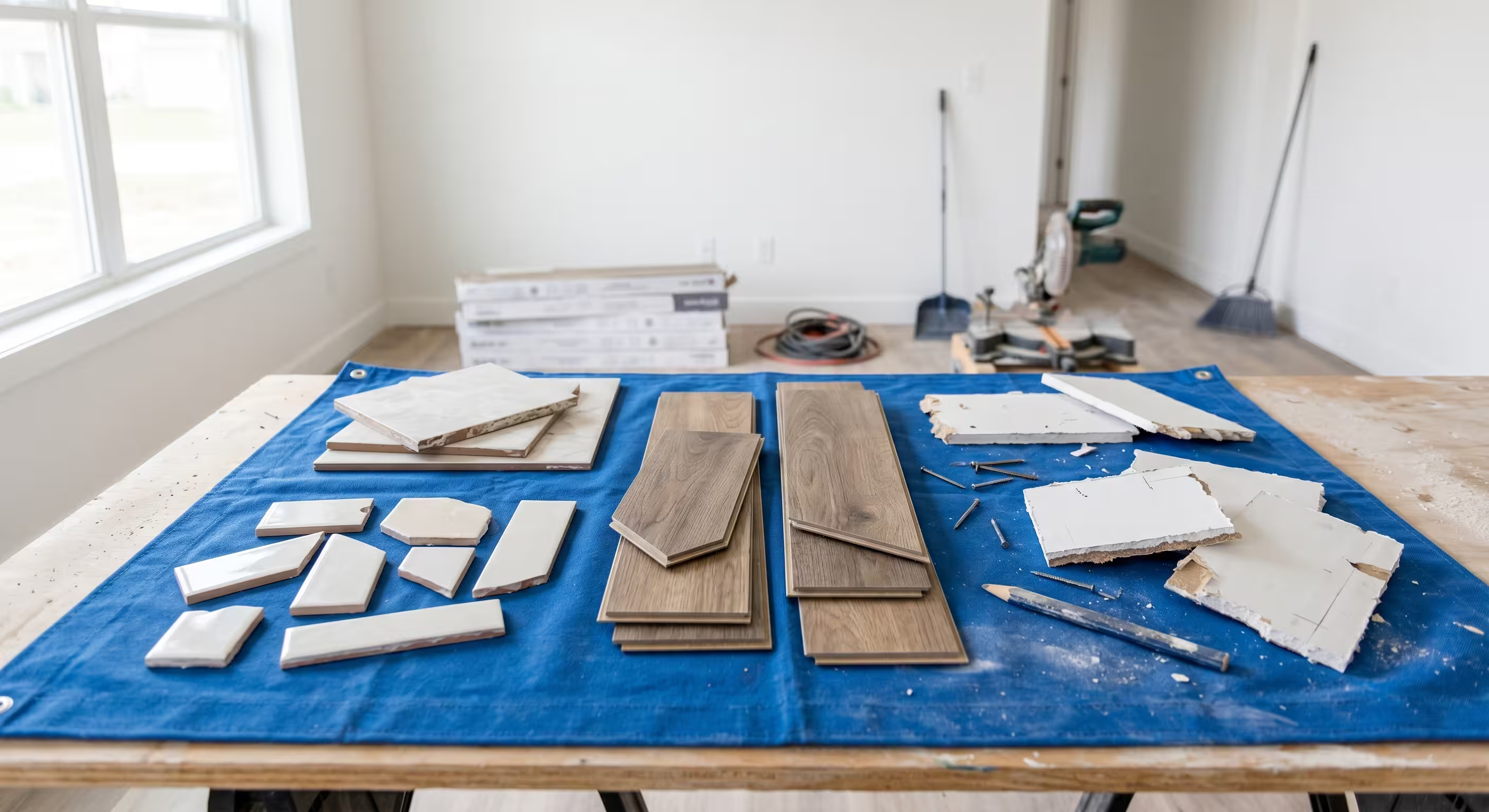
Four things drive how much waste you'll get: cut waste, breakage, pattern-match waste, and mistake waste. Cut waste happens at walls, corners, and obstructions where full pieces don't fit. Breakage covers materials damaged in transit or during installation, which the Tile Council of North America puts at 2–5% for ceramic tile. Pattern-match waste applies to materials with repeating visual patterns (hardwood planks, patterned vinyl, wallpaper) where sections need to align across seams. Mistake waste covers installer error, bad measurements, and dye-lot mismatches between replacement boxes. Contractors apply higher waste factors for complex layouts like herringbone tile, diagonal plank flooring, and multi-valley roofs, where cut frequency goes up 30–50%.
Standard Waste Factor Percentages by Material
Standard waste factor percentages run from 8% for paint to 20% for diagonal tile patterns across 10 common materials. The table below shows both the standard percentage and the complex-layout percentage for each.
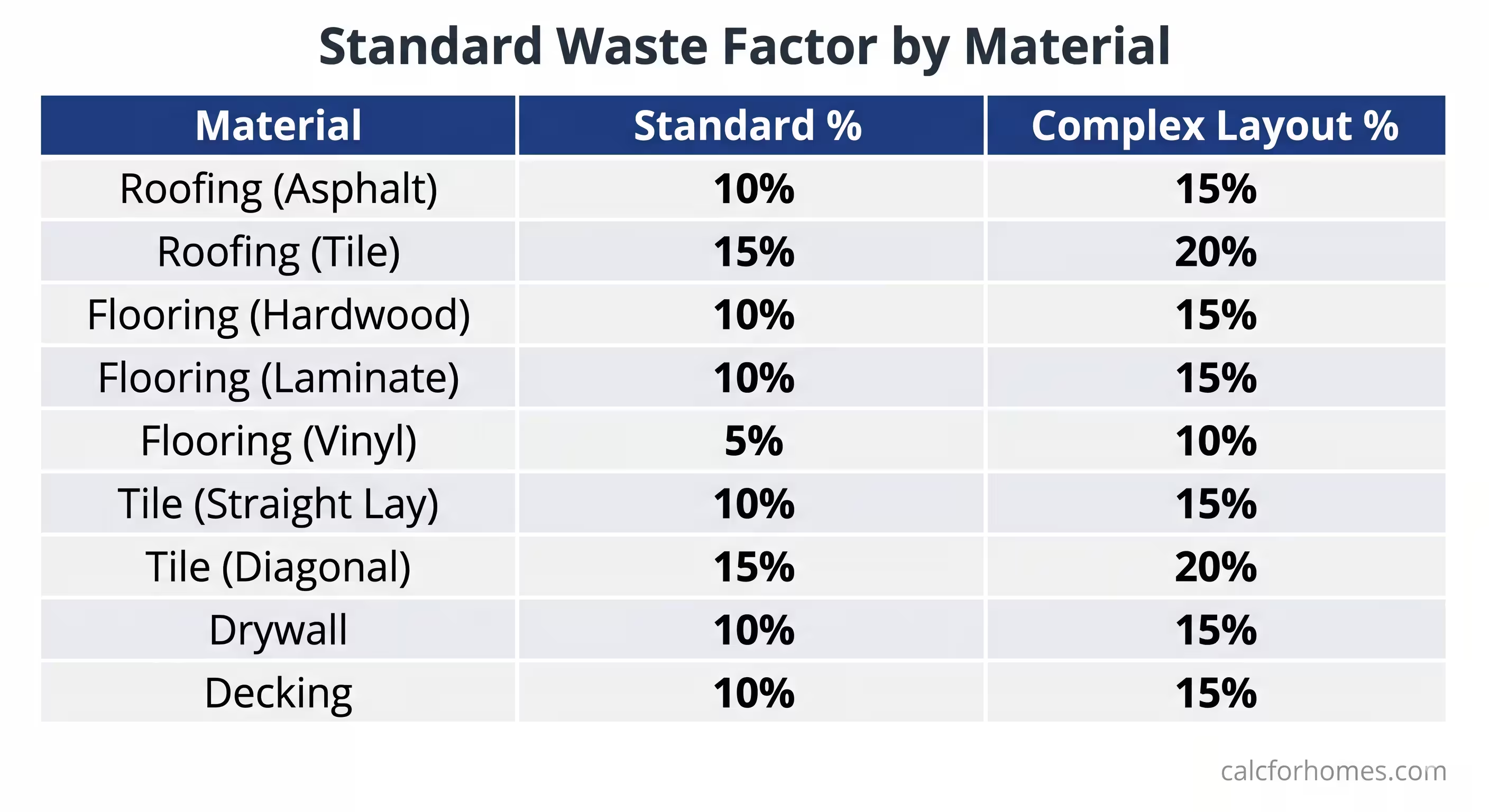
| Material | Standard Waste % | Complex Layout % |
|---|---|---|
| Asphalt roofing shingles | 10% | 15–20% |
| Hardwood flooring | 10% | 15% |
| Laminate flooring | 8% | 12% |
| Vinyl plank flooring | 10% | 15% |
| Ceramic tile (straight lay) | 10% | — |
| Ceramic tile (diagonal) | 15% | 20% |
| Mosaic / patterned tile | 15% | 20% |
| Drywall | 10% | 15% |
| Composite decking | 10% | 15% |
| Carpet | 10% | 15% |
| Paint | 8% | 10% |
The complex-layout column applies to diagonal installations, multi-valley roofs, cathedral ceilings, large-format tile, herringbone patterns, or irregular room shapes.
Waste Factor for Roofing Shingles
The waste factor for roofing shingles is 10% for simple gable roofs, 12–15% for hip roofs, and 15–20% for multi-valley or complex roofs. A gable roof has 2 sloped planes meeting at a ridge. A hip roof has 4 planes, and the hip lines need diagonal cuts. Multi-valley roofs with dormers, skylights, or chimneys cut more often, so they waste more. For an accurate material estimate based on your roof geometry, use our roofing calculator to get bundles and square footage in one step.
Three things change roofing shingle waste:
- Roof complexity: Simple gable roofs use 10%. Hip roofs with 4 slopes use 12–15% because hip cuts require diagonal trimming. Multi-valley roofs with dormers and skylights run 15–20% from flashing cut waste.
- Starter strip and ridge cap: Starter strips at the eaves and ridge caps at the peak add 1–2 bundles per 30 linear feet, which most estimates leave out of the base square footage.
- Shingle type: Asphalt shingles use 10% standard waste, metal shingles 12–15% due to panel sizing, and slate or tile roofing 15–20% because individual pieces break more often during installation.
Waste Factor for Flooring
The waste factor for flooring is 10% for rectangular rooms with straight planks and 15% for L-shaped rooms or diagonal layouts. Hardwood, laminate, and vinyl plank all follow this baseline, though laminate can drop to 8% because it breaks less than solid hardwood. The National Wood Flooring Association (NWFA) recommends adding 5% when planks run diagonally to the longest wall.
Four things change flooring waste:
- Room shape: Square and rectangular rooms use 10%. L-shaped, U-shaped, or multi-angle rooms use 15% because more cut pieces get discarded at corners.
- Plank direction: Straight runs parallel to the longest wall use 10%. Diagonal layouts at 45 degrees use 15% because end cuts double at both ends of each row.
- Plank width: Wide planks (7 inches and wider) use 12–15% because pattern matching across longer boards wastes more than narrow strip flooring.
- Installer skill: Pros usually run 7–10%. DIY installers use 12–15% to cover miscuts and measurement errors.
Plug your room dimensions and plank direction into our flooring calculator to get the exact order quantity.
Waste Factor for Tile Installation
The waste factor for tile is 10% for straight-lay, 15% for diagonal layouts, and 20% for mosaic or patterned installations. Straight-lay puts tiles parallel to the walls and produces the fewest cut pieces. Diagonal installations rotate tiles 45 degrees to the walls, which doubles the triangular cuts at each wall. Mosaic patterns (herringbone, basketweave, pinwheel) need pattern alignment, which raises cut waste further.
Four tile factors change waste:
- Layout pattern: Straight lay uses 10%. Diagonal uses 15%. Herringbone, chevron, and mosaic patterns use 20% because each tile intersection has to align precisely.
- Tile size: Standard tiles (12"×12" and smaller) use 10%. Large-format tiles (24"×24" and larger) use 15% because breakage during handling doubles and cut pieces can't be reused elsewhere.
- Tile material: Ceramic uses 10%, porcelain 10–12%, and natural stone (marble, travertine, slate) 15% because color and grain variation causes pattern-match rejection.
- Room shape: Rooms with multiple alcoves, niches, or curved walls use 15–20% because cuts pile up.
For a full cost breakdown including material, labor, and waste, use our tile installation cost calculator.
Waste Factor for Drywall
The waste factor for drywall is 10% for standard 8-foot flat ceilings and 15% for cathedral ceilings or rooms with several cutouts. Standard installations use 4'×8' or 4'×12' sheets hung horizontally or vertically against the studs. Cathedral, tray, and coffered ceilings need angled cuts and custom-fit sheets, which raises waste.
Three drywall waste factors:
- Ceiling type: Standard 8-foot flat ceilings use 10%. Cathedral and vaulted ceilings use 15% because angled rafters need trapezoidal drywall cuts.
- Cutouts: Windows, doors, electrical outlets, and HVAC vents create cutouts drywallers can't reuse. A wall with 5 or more cutouts uses 12–15% instead of 10%.
- Room shape: Rectangular rooms use 10%. Rooms with bump-outs, niches, or curved walls use 15%.
For a sheet-by-sheet material order, use our drywall calculator.
Waste Factor for Decking
The waste factor for decking is 10% for straight-board layouts and 15% for picture-frame or diagonal patterns. Straight-board decking runs boards parallel to the house with butt joints staggered across joists. Picture-frame decking wraps the perimeter with a border board and often runs diagonal field boards, both of which raise cut waste.
Four decking waste factors:
- Board pattern: Straight boards use 10%. Picture-frame borders use 13%. Diagonal 45-degree field patterns use 15% from doubled end cuts per row.
- Board material: Pressure-treated wood uses 10%, cedar and redwood 12% from knot rejection, and composite decking (Trex, TimberTech, Azek) 10% with less breakage.
- Stair stringers: Each stringer and riser needs 2–3 extra boards beyond field calculations. Decks with stairs on 2 or more sides add 3–5% waste.
- Deck shape: Rectangular decks use 10%. Octagonal, curved, or multi-level decks use 15–20%.
Calculate boards for any deck shape and pattern with our deck board calculator.
Waste factor percentages are a starting point. The right amount depends on your project. Room shape, layout pattern, and your skill level all change the math. Use the calculator for your material above, plug in square footage and waste percentage, and you'll get the exact quantity to order with no leftover boxes and no second trip to the store mid-project.
When to Increase the Waste Factor
Add 5% above the standard waste factor in any of these cases. Each one below lists the trigger and why waste goes up.
- Inexperienced or DIY installer: Add 5% because miscuts and bad measurements happen 2–3 times more often for first-time installers.
- Irregular room shape: Add 5% for L-shaped, U-shaped, or curved rooms because cut frequency at corners goes up 30–50%.
- Diagonal or patterned layout: Add 5–10% because diagonal runs double the end cuts and patterns need specific alignment.
- Large-format tile or wide plank: Add 3–5% because oversized pieces break more often and cut pieces can't be reused at narrow perimeter areas.
- Steep or complex roof: Add 5% for roofs with multiple valleys, dormers, or pitches steeper than 8:12, because cut angles multiply at every valley.
- Multiple cutouts per wall: Add 3% for walls with 5 or more windows, doors, or electrical boxes, because drywall cutouts discard usable material.
- Natural material with visual variation: Add 5% for hardwood, marble, travertine, and slate because color and grain rejection during installation discards 2–4% of pieces.
How to Calculate Waste Factor Into Your Order
Multiply the base quantity by 1 plus the waste percentage written as a decimal. The formula works for anything measured in square feet, linear feet, or individual units.
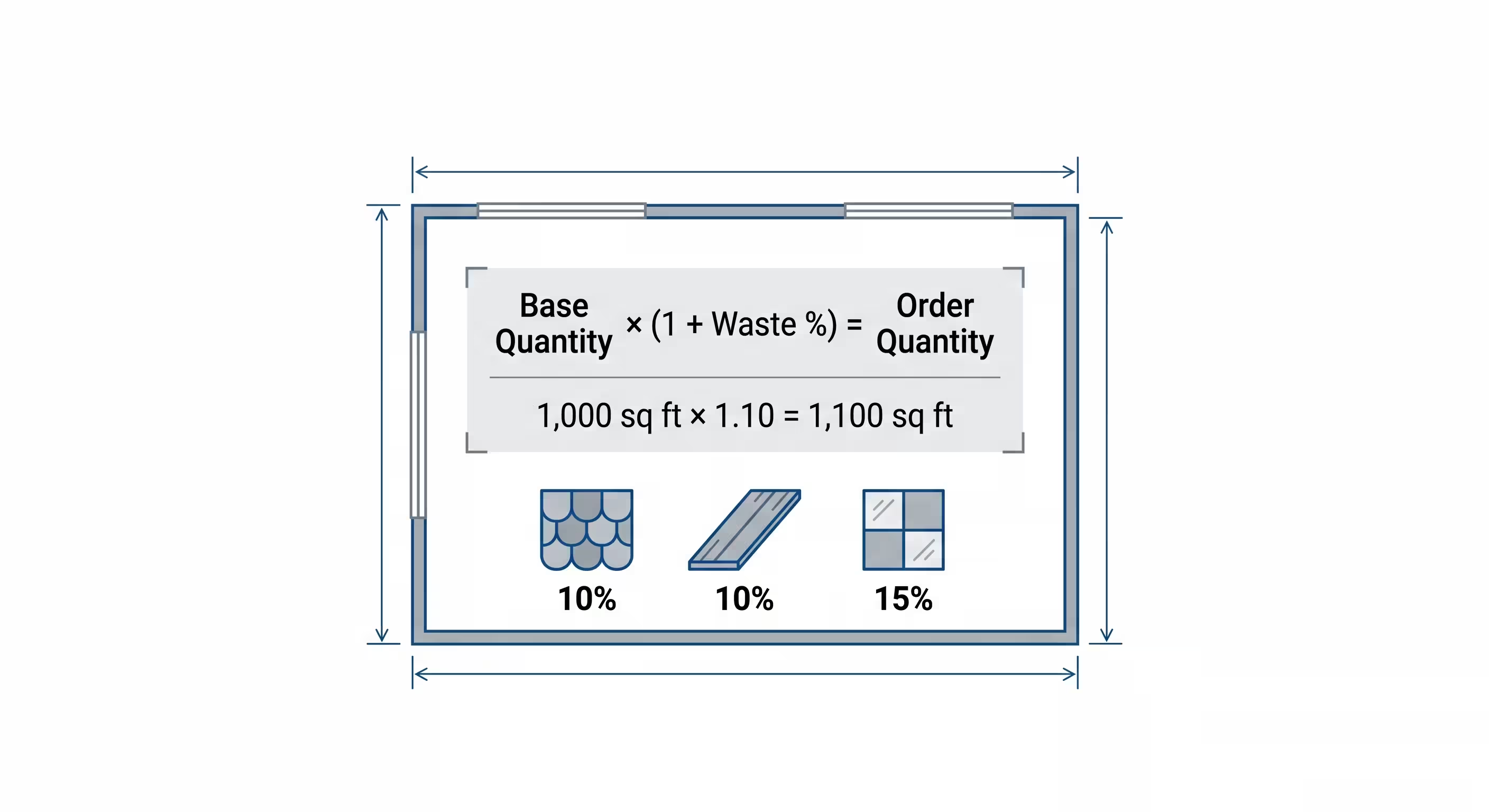
Formula: Base Quantity × (1 + Waste %) = Order Quantity
Example: a 1,000 square foot hardwood floor with 10% waste needs 1,000 × 1.10 = 1,100 square feet of flooring. A 450 square foot bathroom tile installation with 15% diagonal waste needs 450 × 1.15 = 517.5 square feet, which rounds up to 518 square feet.
The same rule applies to a concrete pour, where the 10% standard matters even more because you cannot stop midway to order another truck. Our concrete slab cost calculator builds that 10% into both the cubic yards and the material cost it estimates, so the quantity you order already covers normal spillage and uneven ground.
Three rules apply every time:
- Convert the waste percentage to a decimal (10% = 0.10, 15% = 0.15, 20% = 0.20).
- Always round up to the next full box, bundle, or sheet, because manufacturers sell materials in fixed units.
- Add the waste factor to the base quantity before rounding, not after, to avoid under-ordering by 3–5%.
Contractors often order 1 extra box beyond the calculated quantity for attic storage. It covers dye-lot matching for future repairs.
Common Waste Factor Mistakes to Avoid
These five mistakes cause homeowners to under-order materials or overspend on unused inventory.
- Skipping waste factor entirely: Ordering exact square footage with 0% waste guarantees you'll run short mid-project, because every installation produces 8–20% unusable cuts.
- Using one waste percentage for complex layouts: Applying 10% waste to a diagonal tile installation produces a 5% shortfall, because diagonal cuts need 15% minimum.
- Buying more mid-project from a different dye lot: Ceramic tile, hardwood, and carpet batches vary in color between manufacturing runs, and replacement boxes purchased later visibly differ in shade from the original order.
- Counting cutouts as waste: Drywallers and flooring installers can't reuse cutout pieces at windows, doors, and outlets in most cases, so cutout area doesn't reduce the required material order.
- Rounding down to save money: Ordering 1,085 square feet instead of 1,100 saves $60–$120 upfront but costs $200–$500 in delivery fees and project delays when the extra material arrives late.