
Metal lasts longer and handles weather better. Asphalt costs less upfront and installs faster. According to the Asphalt Roofing Manufacturers Association (ARMA), asphalt shingles cover 75 percent of US residential roofs. Metal roofing has 17 percent market share with 3 percent annual growth per the Metal Construction Association.
This guide compares both materials across 8 factors: upfront price, durability ratings, energy efficiency, and climate suitability. Sources include the National Association of Home Builders (NAHB), Remodeling Magazine's Cost vs Value Report, and the US Department of Energy.
Asphalt shingles vs metal roof: quick comparison
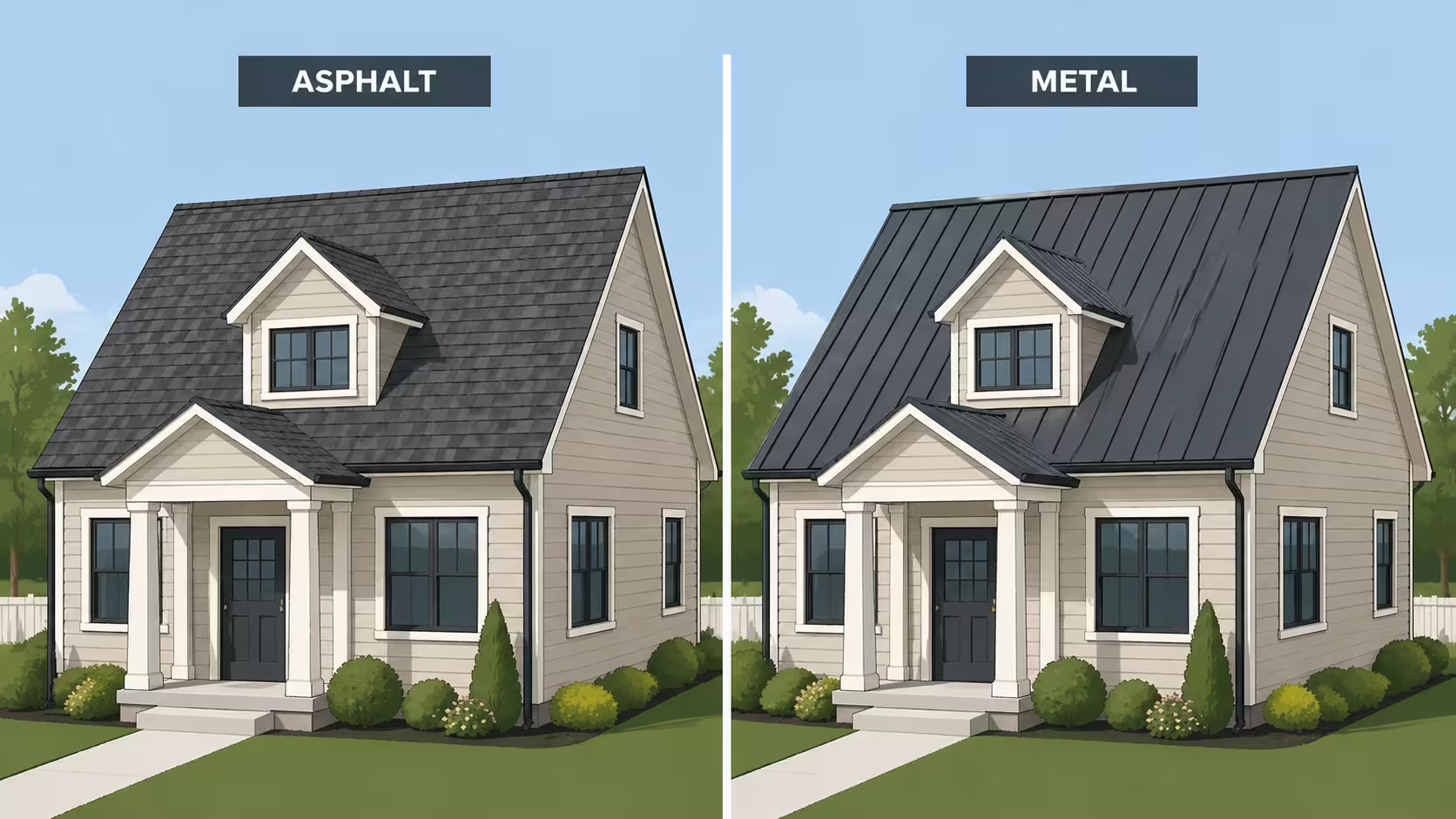
Asphalt shingles and metal roofs differ across 7 factors: cost, lifespan, weight, fire rating, wind resistance, energy efficiency, and warranty. Asphalt is cheaper upfront and faster to install. Metal lasts longer, handles weather better, and saves on energy.
| Feature | Asphalt Shingles | Metal Roof |
|---|---|---|
| Installed Cost (per sq ft) | $4 to $7 | $8 to $16 |
| Average Lifespan | 20 to 30 years | 40 to 70 years |
| Weight (per square) | 200 to 450 lbs | 50 to 150 lbs |
| Fire Rating | Class A (with fiberglass mat) | Class A (steel, aluminum) |
| Wind Rating | 110 to 130 mph | 140 to 180 mph |
| Energy Efficiency | Reflects 5 to 25 percent solar heat | Reflects 25 to 67 percent solar heat |
| Manufacturer Warranty | 25 to 50 years (limited) | 30 to 50 years (paint and substrate) |
Cost comparison: asphalt shingles vs metal roof
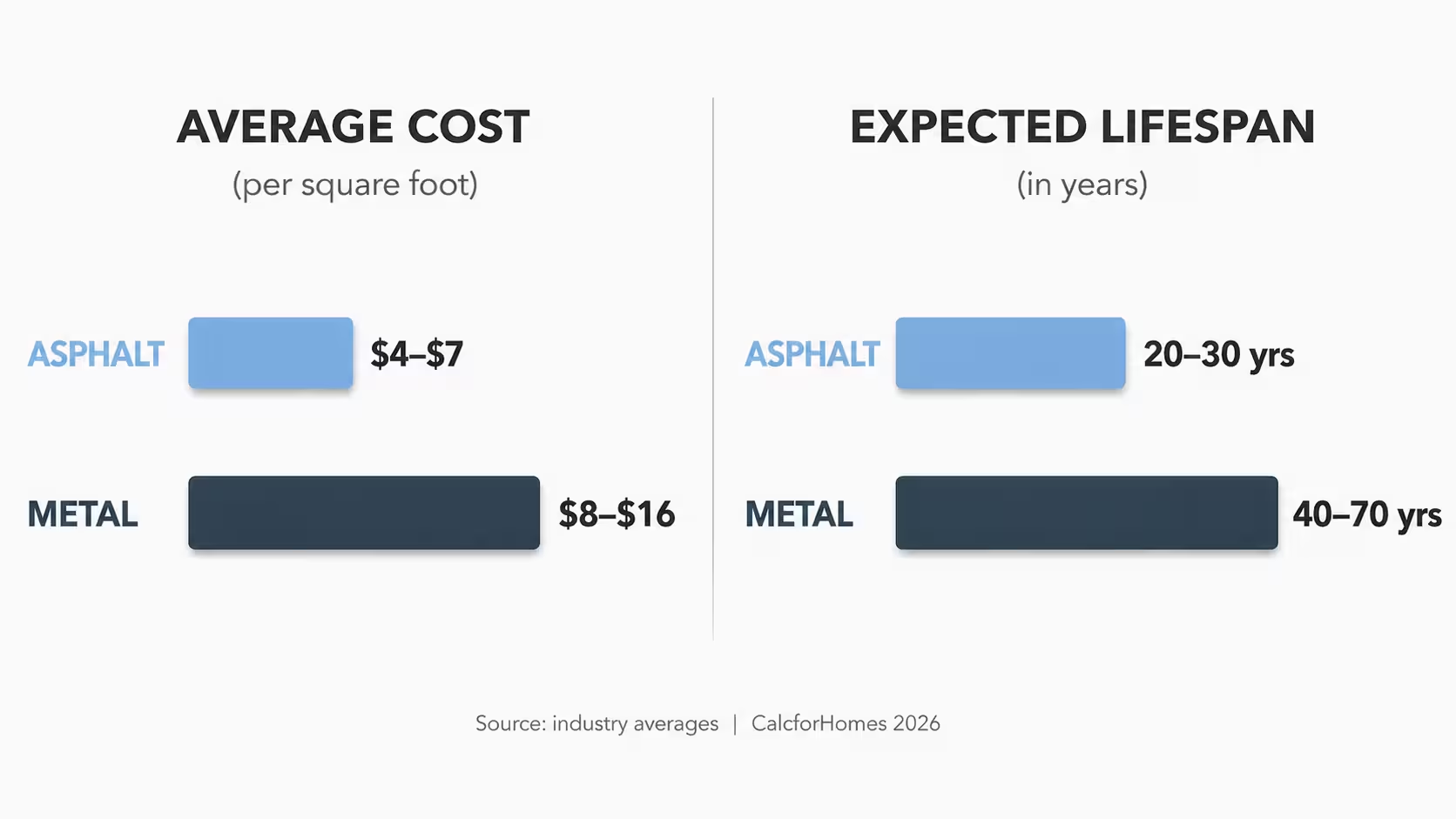
Asphalt shingles cost 50 to 65 percent less than metal roofing on average. A 2,000 sq ft home costs $8,000 to $14,000 for asphalt and $16,000 to $32,000 for metal, including materials and labor (HomeAdvisor 2025 data).
Material is 40 percent of an asphalt project's cost and 60 percent of a metal project's cost. Standing seam metal panels run $10 to $16 per sq ft installed, corrugated metal runs $5 to $10 per sq ft, and stone-coated steel runs $10 to $14 per sq ft. Architectural asphalt shingles cost $4.50 to $7 per sq ft installed; 3-tab shingles cost $4 to $5.50 per sq ft. Labor rates run $40 to $80 per hour for asphalt crews and $60 to $120 per hour for certified metal installers. Roof complexity, including pitch, valleys, and penetrations, adds 10 to 25 percent to base costs. For accurate quantity estimates, see how to calculate roofing squares before requesting bids from contractors.
| Cost Type | Asphalt ($) | Metal ($) | Difference ($) |
|---|---|---|---|
| Material (per sq ft) | $1.50 to $3.00 | $4.00 to $9.00 | $2.50 to $6.00 |
| Installation labor (per sq ft) | $2.50 to $4.00 | $4.00 to $7.00 | $1.50 to $3.00 |
| Total per sq ft | $4.00 to $7.00 | $8.00 to $16.00 | $4.00 to $9.00 |
| 2,000 sq ft home (total) | $8,000 to $14,000 | $16,000 to $32,000 | $8,000 to $18,000 |
| Tear-off and disposal | $1,000 to $1,500 | $1,000 to $1,500 | $0 |
| Permit fees | $150 to $500 | $250 to $700 | $100 to $200 |
The price difference depends on your roof size, pitch, and material grade. Use our asphalt shingle calculator to price a traditional shingle roof, or our metal roofing cost calculator for a standing seam or corrugated metal roof.
Lifespan and durability: which roof lasts longer?
Metal roofs last 40 to 70 years; asphalt shingles last 20 to 30 years. Metal outlasts asphalt by 20 to 40 years on average. Standing seam metal panels can reach 70 years with proper installation. 3-tab asphalt shingles average 20 years, and architectural shingles average 25 to 30 years per the National Association of Home Builders.
Durability ratings differ across 3 weather hazards: wind, hail, and fire. Metal panels withstand wind speeds of 140 to 180 mph; asphalt shingles handle 110 to 130 mph (Class H rating). For hail, both materials achieve UL 2218 Class 4 ratings when impact-resistant variants are installed, although standard 3-tab asphalt cracks under hail above 1.5 inches diameter. Both materials earn Class A fire ratings, the highest UL certification. Metal roofs maintain structural integrity in wildfire zones; asphalt requires Class A fiberglass mat for equivalent performance. Climate exposure shortens both lifespans. UV degradation reduces asphalt life by 20 to 30 percent in southern states like Arizona and Texas. Coastal salt spray cuts metal lifespan by 10 to 15 percent in Florida and California unless aluminum or zinc-coated steel is used.
| Material | Avg Lifespan | Wind Rating | Hail Rating | Fire Rating |
|---|---|---|---|---|
| 3-tab Asphalt | 20 years | 110 mph | Class 3 | Class A |
| Architectural Asphalt | 25 to 30 years | 130 mph | Class 4 (impact-resistant) | Class A |
| Steel (corrugated) | 40 to 50 years | 140 mph | Class 4 | Class A |
| Standing Seam Metal | 50 to 70 years | 180 mph | Class 4 | Class A |
| Aluminum | 50 years | 160 mph | Class 4 | Class A |
| Stone-Coated Steel | 50 to 70 years | 170 mph | Class 4 | Class A |
Pros and cons of asphalt shingles
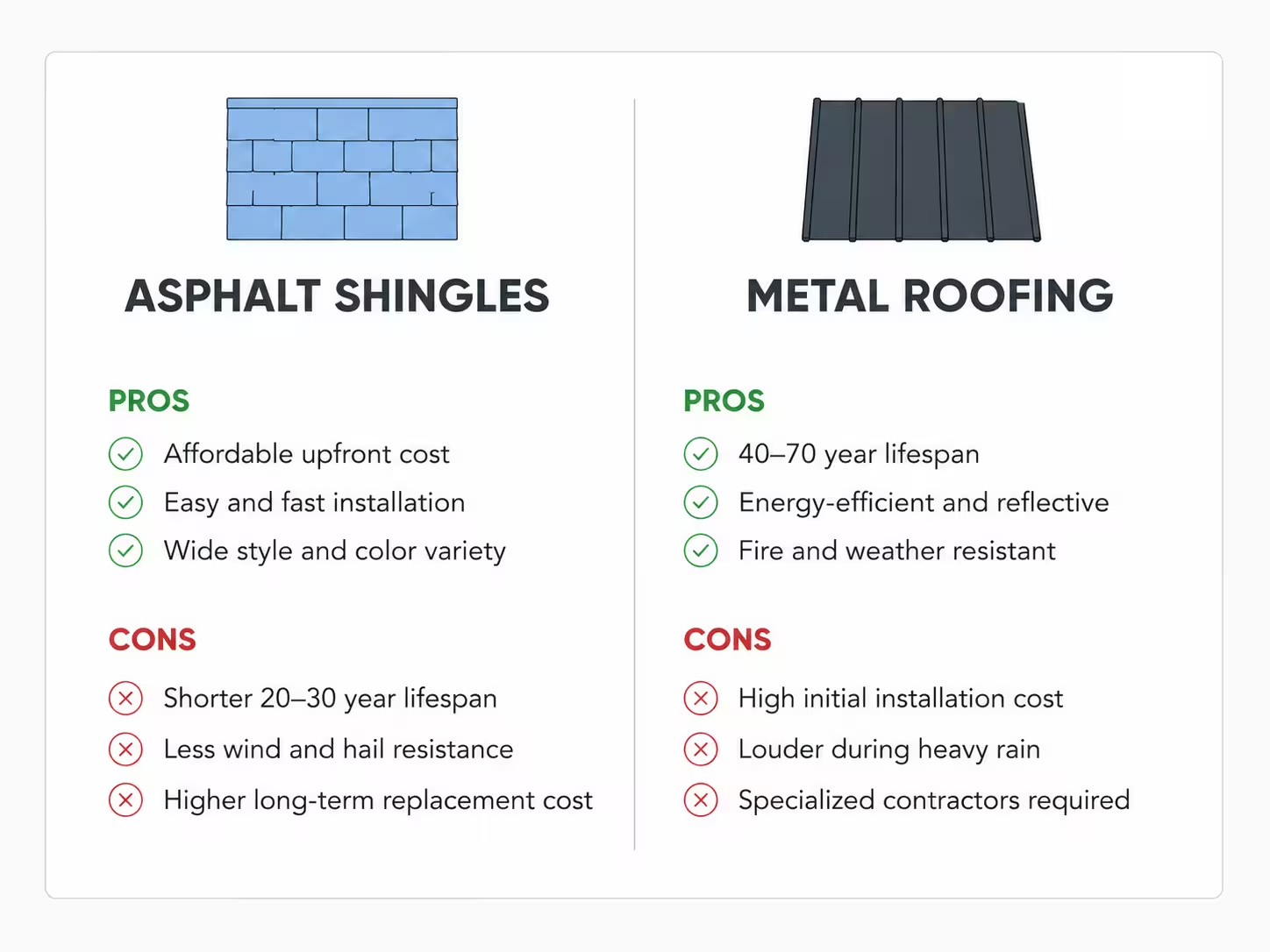
Cost and availability are asphalt's wins. Lifespan and weather vulnerability are its main weaknesses.
Pros of asphalt shingles:
- Costs $4 to $7 per sq ft installed, the lowest residential roofing price.
- Installs in 1 to 3 days for a 2,000 sq ft home with standard pitch.
- Suits 12 architectural styles, including colonial, ranch, and craftsman homes.
- Repairs cost $200 to $500 per damaged section, accessible to most contractors.
- Stocks at retailers such as Home Depot, Lowe's, and ABC Supply for fast replacement.
Cons of asphalt shingles:
- Lasts 20 to 30 years, requiring replacement 2 times during a 50 year ownership.
- Cracks under hail impacts above 1.5 inches without Class 4 impact rating.
- Absorbs solar heat, raises attic temperatures by 20 to 40 degrees Fahrenheit.
- Sheds protective granules after 15 years, exposes the asphalt mat to UV damage.
- Sends 10 million tons of waste to US landfills annually per EPA estimates.
Pros and cons of metal roofing
Longevity and weather resistance are metal's wins. Upfront cost and noise are its main weaknesses.
Pros of metal roofing:
- Lasts 40 to 70 years with minimal maintenance, equal to 2 asphalt lifespans.
- Reflects 25 to 67 percent of solar radiation per US Department of Energy data.
- Withstands wind speeds of 140 to 180 mph, suited for hurricane-prone regions.
- Earns Class A fire rating, the highest UL certification for residential roofing.
- Recycles 100 percent at end of service life, reduces landfill waste.
Cons of metal roofing:
- Costs $8 to $16 per sq ft installed, 2 to 3 times higher than asphalt.
- Amplifies rain noise by 10 to 15 decibels without attic insulation upgrades.
- Dents under hail above 1.25 inches, especially aluminum and copper panels.
- Requires certified installers from associations such as MRA, limits contractor options.
- Expands and contracts 1.5 inches per 100 feet, loosens fasteners every 20 years.
Which roof type is better for your home?
The choice depends on 5 factors: budget, climate, length of stay, home style, and resale priority. Neither material wins universally.
Asphalt is the better pick for short-term ownership and tight budgets. Metal wins for long-term ownership in extreme climates. Homeowners staying 7 years or fewer rarely recover metal's premium cost, since the savings come from avoiding replacement at year 25. Climate intensity also tips the decision. Hurricane zones, wildfire regions, and heavy snow areas favor metal. Mild temperate zones favor asphalt's cost efficiency.
Choose asphalt shingles if:
- Your budget falls below $15,000 for a 2,000 sq ft roof replacement.
- Your ownership horizon is 10 years or fewer before selling the home.
- Your neighborhood comparable homes use asphalt for visual consistency.
- Your climate is mild temperate, such as Kentucky, Tennessee, or North Carolina.
- Your priority is fast installation, completing the project in under 1 week.
Choose metal roofing if:
- Your budget allows $20,000 to $35,000 for a 2,000 sq ft roof replacement.
- Your ownership horizon exceeds 20 years, capturing full lifespan value.
- Your region experiences hurricanes, wildfires, or annual snowfall above 60 inches.
- Your home style is modern, farmhouse, or craftsman, complementing metal aesthetics.
- Your priority is energy savings, targeting 10 to 25 percent cooling cost reduction.
Resale value: does a metal roof add more home value?
A metal roof adds 1 to 6 percent to home resale value; asphalt shingles add 0 to 2 percent, according to the 2024 Remodeling Magazine Cost vs Value Report. The Metal Roofing Alliance reports a $1.45 increase in home value per $1 spent on metal in regions with extreme weather, such as Florida, Texas, and Colorado.
Buyer perception drives the value premium. Appraisers credit metal roofs with 30 to 50 years of remaining useful life on a 5 year old installation, compared to 15 to 20 years for asphalt. ENERGY STAR certified metal roofs also qualify for federal tax credits up to $500 (Inflation Reduction Act, Section 25C). For a full breakdown of replacement costs, including labor, tear-off, and permits, see our roof replacement cost guide before listing your home.
Climate considerations for roof material choice
The 6 main US climate zones each favor a different roofing material based on weather hazards. Hurricane-prone, snowy, wildfire, and hot regions favor metal roofing. Mild temperate climates and budget-constrained markets favor asphalt shingles.
| Climate Type | Region Examples | Recommended Material | Why |
|---|---|---|---|
| Hurricane-prone | Florida, Georgia, North Carolina | Standing seam metal | Withstands 140 to 180 mph winds, sealed seams resist water infiltration |
| Heavy snow | Vermont, Minnesota, Maine | Metal (smooth-finish) | Sheds snow naturally at 4:12 pitch, prevents ice dams |
| Wildfire | California, Arizona, Colorado | Metal (steel or aluminum) | Class A fire rating, non-combustible surface, ember-resistant |
| Hot and sunny | Texas, Nevada, Arizona | Metal (cool roof coating) | Reflects 25 to 67 percent solar heat, cuts cooling costs 10 to 25 percent |
| Hail-prone | Texas, Oklahoma, Kansas | Class 4 asphalt or stone-coated steel | Both achieve UL 2218 Class 4 impact ratings |
| Mild temperate | Kentucky, Tennessee, Virginia | Architectural asphalt | Cost-effective at $5 to $7 per sq ft, sufficient 25 to 30 year durability |
Steep slope roofs above 6:12 pitch increase metal installation costs by 15 to 30 percent because of safety equipment and labor time. Calculate your slope using our roof pitch calculator before requesting bids from local contractors.