
What is a roofing square?
A roofing square is a unit of measurement equal to 100 square feet of roof surface. Roofing contractors and material manufacturers, including GAF, Owens Corning, and CertainTeed, quote shingles, underlayment, felt rolls, and labor "per square" rather than per square foot. One roofing square equals 100 square feet, so a 2,000 square foot roof contains 20 base squares before any waste factor. Because shingle bundles, synthetic underlayment, and contractor labor quotes all reference this 100 square foot unit, converting your roof area into squares is the first step in any accurate material estimate. If you have not measured your roof yet, our primer on how to calculate square feet walks through the area math before you scale up to roofing squares.
How to calculate roofing squares step by step
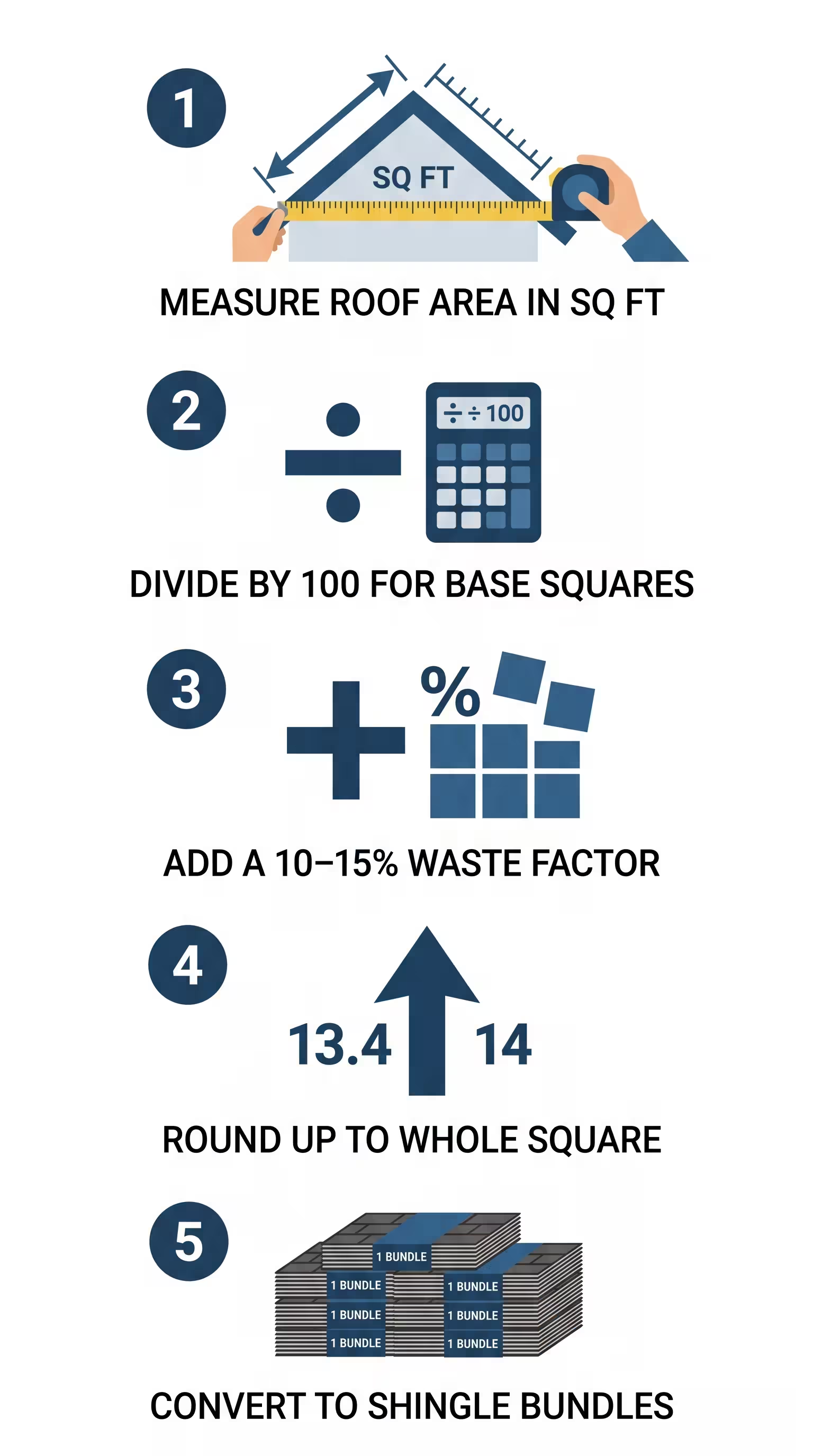
There are 5 steps to calculate roofing squares accurately for any residential roofing project:
- Measure the total roof area in square feet by recording each plane separately and applying the correct pitch multiplier (1.118 for a 6/12 pitch, 1.25 for a 9/12 pitch, and 1.414 for a 12/12 pitch). For full plane-by-plane instructions, see our roof measurement guide.
- Divide the total roof area by 100 to get base squares. A 2,400 square foot roof produces 24 base squares before waste is applied.
- Add a waste factor based on roof complexity: 10% for simple gable roofs, 15% for hip roofs with valleys, and up to 20% for cut-up roofs with multiple dormers.
- Round up the result to the nearest whole square because suppliers, including ABC Supply and Beacon Building Products, do not sell partial squares.
- Convert squares to shingle bundles using the manufacturer ratio: 3 bundles per square for standard 3-tab and most architectural shingles, and 4 bundles per square for heavy designer asphalt shingles.
Roofing square calculation formula
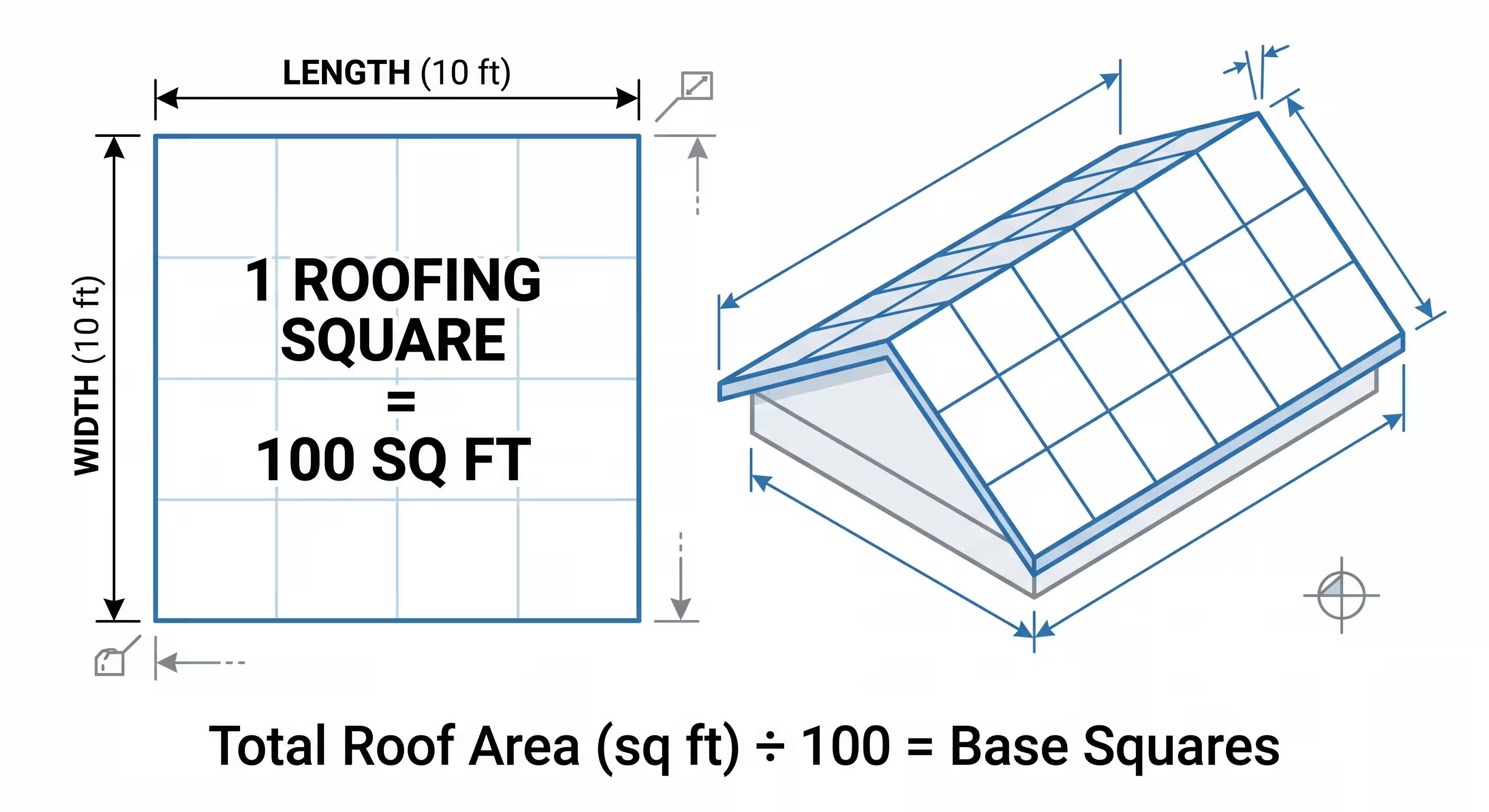
The roofing square formula is Roofing Squares = (Total Roof Area in sq ft ÷ 100) × (1 + Waste Factor). For a 2,400 square foot roof with a 15% waste factor, the calculation is (2,400 ÷ 100) × 1.15 = 27.6, which rounds up to 28 squares.
The table below shows full calculations for 3 common roof types using a 15% waste factor:
| Roof Type | Total Area (sq ft) | Squares (with 15% waste) |
|---|---|---|
| Simple Gable | 1,800 | 21 squares |
| Standard Hip | 2,400 | 28 squares |
| Complex Hip | 3,200 | 37 squares |
Each row uses the same formula. Only the roof area changes. Always round up because no major supplier sells partial squares, and a shortage on installation day adds labor cost and delays the project.
How much waste factor to add for roofing
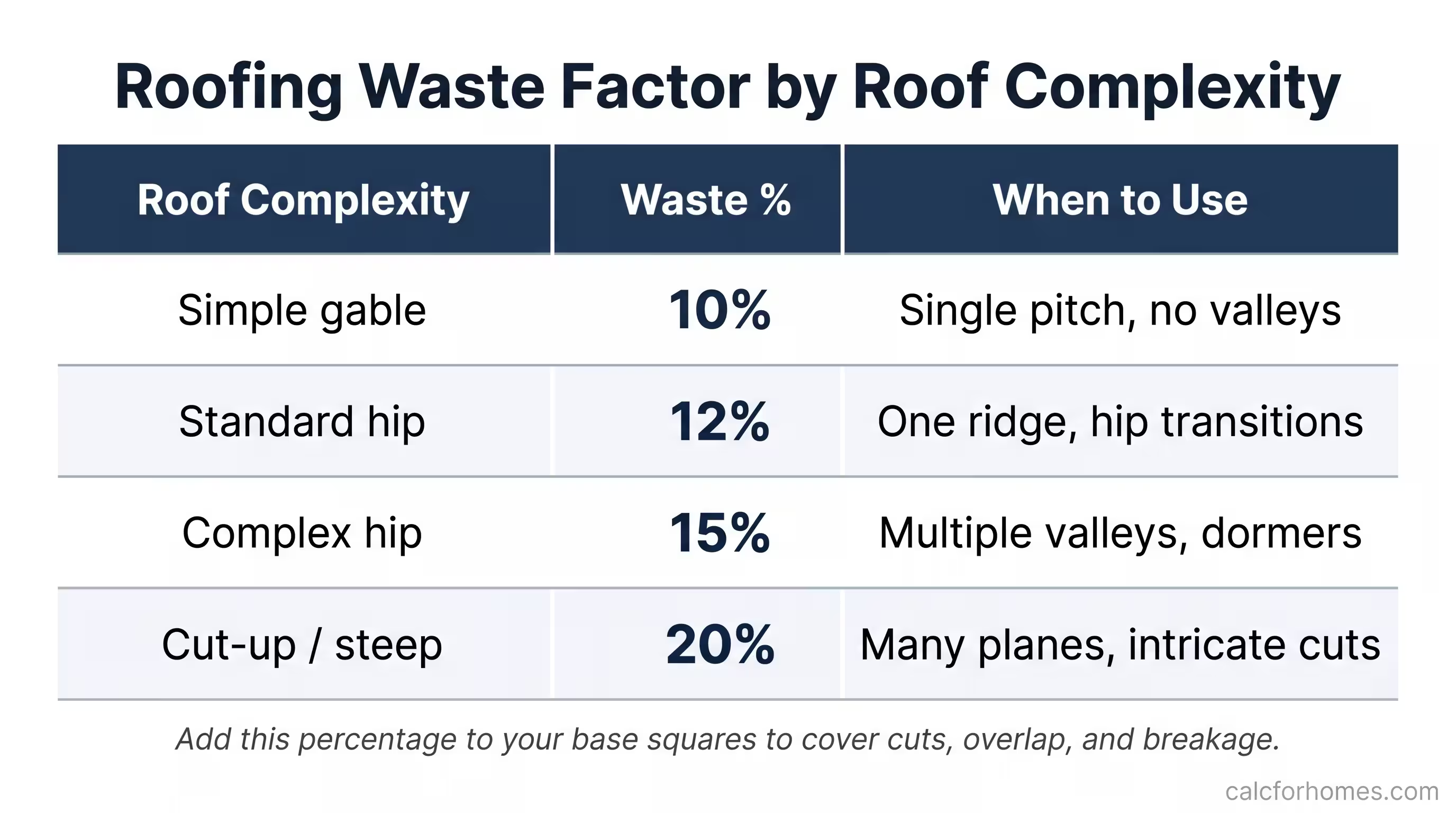
The waste factor for roofing ranges from 10% to 20% depending on roof complexity. Waste covers shingle cuts at hips and valleys, overlap at ridge caps, starter course material, and broken pieces during installation and roof loading. According to the National Roofing Contractors Association (NRCA), most residential roofs need 10% to 15% additional material on top of the base square count.
| Roof Complexity | Waste % | When to Use |
|---|---|---|
| Simple gable | 10% | Single-pitch roofs with no valleys |
| Standard hip | 12% | One ridge with hip transitions |
| Complex hip | 15% | Multiple valleys with dormers |
| Cut-up or steep | 20% | Many planes with intricate cuts |
For a deeper look at waste factors across roofing, flooring, drywall, and other home improvement materials, see our waste factor guide.
Calculating roofing squares manually works for simple gable roofs where you have a clean square footage number and a single waste factor. For complex roofs with multiple slopes, valleys, and dormers, or when you want the math done in seconds, plug your total roof area into our roofing calculator. It does the math and returns the bundle count for your specific shingle type.
How many shingles are in a roofing square?
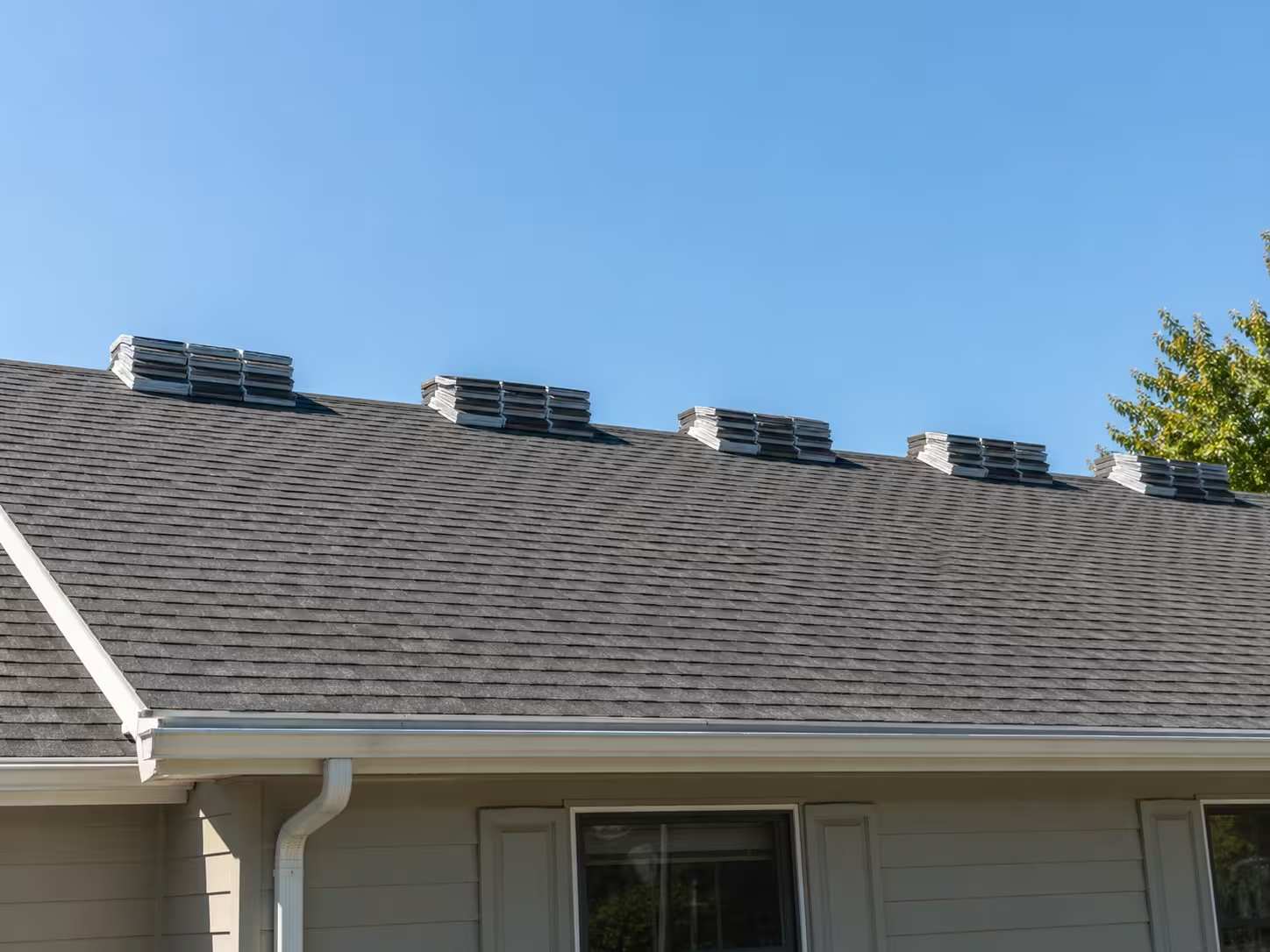
A roofing square contains 3 bundles of shingles for most standard products, covering 100 square feet of roof surface. Bundle count varies by shingle type, weight, and manufacturer:
- 3-tab asphalt shingles: 3 bundles per square
- Architectural or dimensional shingles: 3 bundles per square for most product lines
- Heavy designer asphalt shingles: 4 bundles per square
- Cedar shake: 4 to 5 bundles per square
Most shingle bundles weigh 60 to 80 pounds, so plan your delivery and roof loading carefully if you're staging materials yourself. For a 28 square roof using standard architectural shingles, the order quantity is 28 × 3 = 84 bundles. Manufacturers such as GAF Timberline and Owens Corning Duration print exact bundle coverage on every wrapper, so verify the ratio before placing your order.
Roofing squares by roof size
The table below estimates roofing squares and shingle bundles for 6 common residential roof sizes. These estimates assume a 15% waste factor and 3 bundles per square. Actual quantities vary by shingle type and roof complexity.
| Roof Area (sq ft) | Base Squares | Squares with 15% Waste | Shingle Bundles |
|---|---|---|---|
| 1,500 | 15 | 18 | 54 |
| 2,000 | 20 | 23 | 69 |
| 2,500 | 25 | 29 | 87 |
| 3,000 | 30 | 35 | 105 |
| 3,500 | 35 | 41 | 123 |
| 4,000 | 40 | 46 | 138 |