
What you need to measure a roof
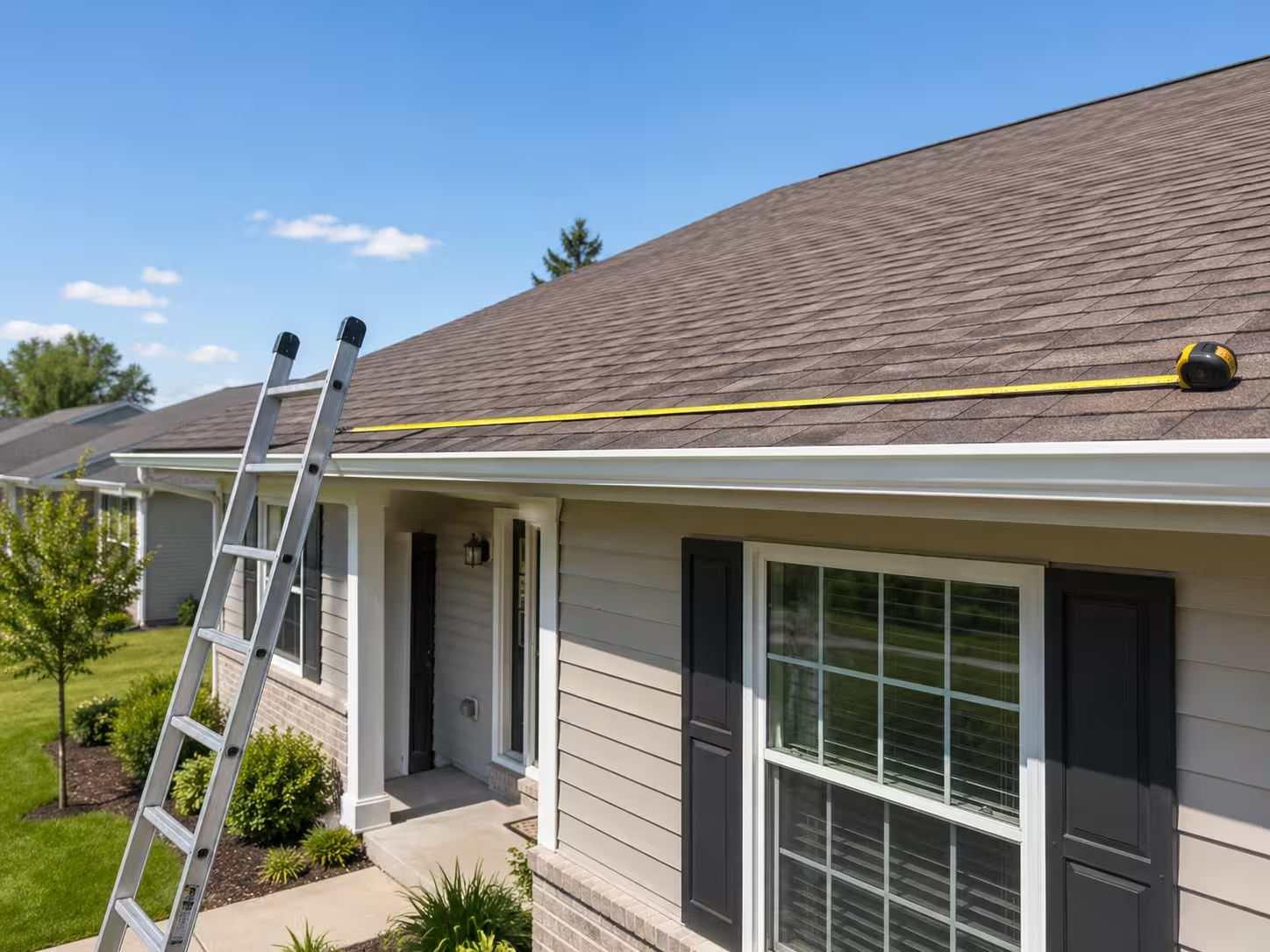
You need 7 tools to measure a roof. They work on most residential rooflines, including gable, hip, and mansard shapes.
- Tape measure (50 ft or longer). A retractable steel tape captures accurate readings across long roof planes without sagging.
- Extension ladder. A 24 ft fiberglass ladder, like the Werner D6224 or Louisville FE3224, reaches most single-story rooflines safely.
- Pencil and notepad. Sketch the roof footprint and record each plane's dimensions on the spot for later calculation.
- Calculator or smartphone. Compute area, pitch multipliers, and totals without manual arithmetic error.
- Laser measure (optional). A laser distance tool, like a Bosch GLM 50 or Leica DISTO, captures distances up to 165 ft with 1/16 inch accuracy.
- Roof pitch finder (optional). A digital pitch gauge, like the Pitch Gauge app or a Johnson Level magnetic finder, measures slope without climbing.
- Drone or satellite tool (optional). Aerial services like EagleView, RoofSnap, and Google Earth give measurements within 2 to 5 percent accuracy.
Safety note: don't measure a roof in wet, icy, or windy conditions. Use ground-based measurement instead.
How to measure a roof step by step
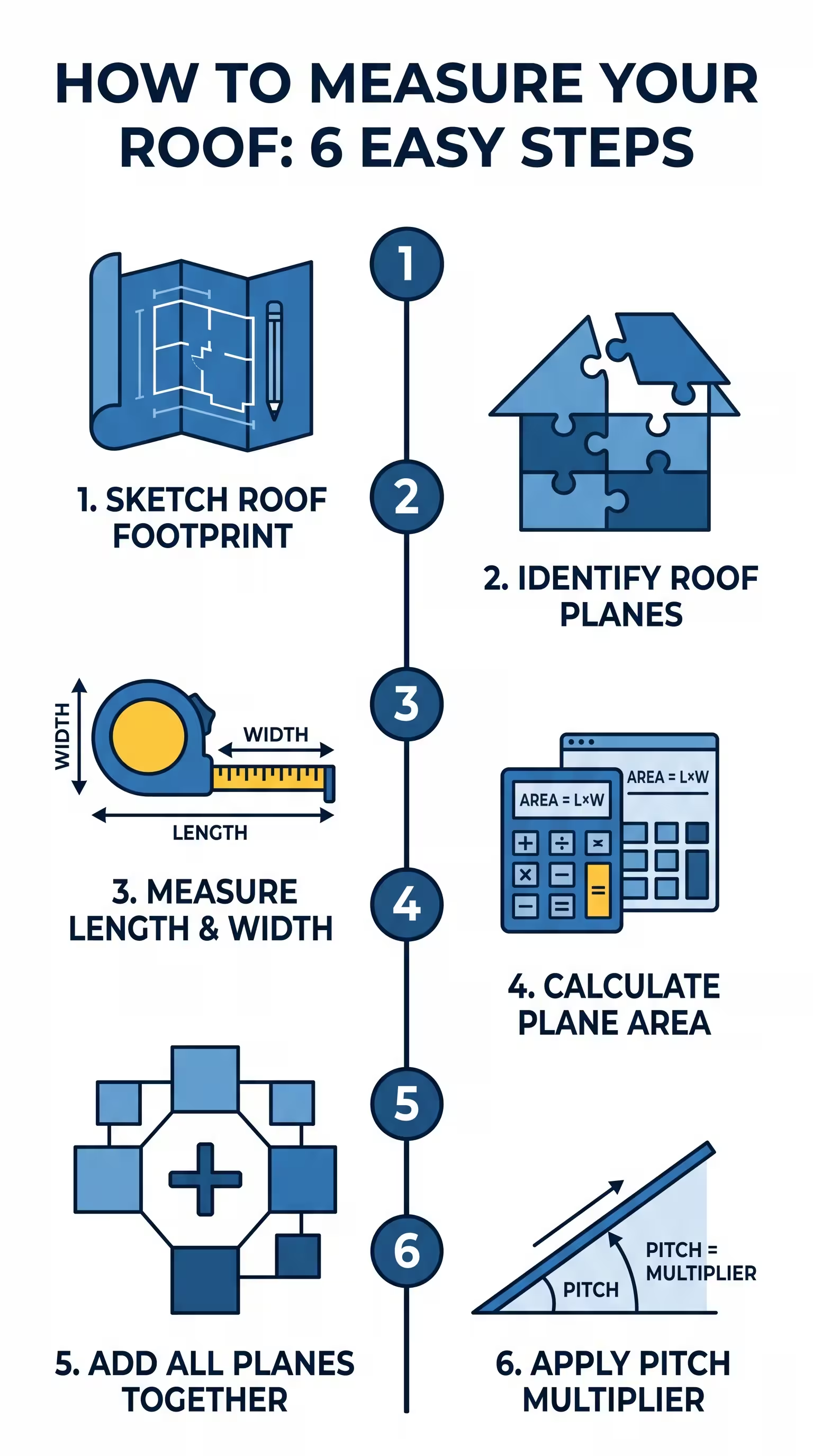
These 6 steps produce the total square footage you need for material ordering. The process works on most residential roof shapes, including gable, hip, mansard, and gambrel.
- Sketch the roof footprint from above. Draw the outline of your home's roof as viewed from a drone, including dormers, overhangs, and chimneys.
- Identify each roof plane separately. Number every flat surface (a gable roof has 2 planes; a hip roof has 4 planes).
- Measure length and width of each plane. Record dimensions from eave to ridge for length, and from one rake edge to the other for width.
- Calculate the area of each plane. Multiply length by width for rectangular planes (the same approach our how to calculate square feet primer covers); apply (base × height) / 2 for triangular sections.
- Add all plane areas for total surface area. Sum every plane's area to produce the total roof square footage.
- Apply the pitch multiplier if measuring footprint only. Multiply the ground footprint by the pitch factor (a 6/12 pitch uses 1.118) to convert flat footprint into actual sloped area.
Once you have the total area, plug it into our roofing calculator to convert square footage into roofing squares, shingle bundles, and underlayment rolls.
A single missed plane can throw your cost projection off by hundreds of dollars.
How to measure a roof from the ground (without climbing)
You can measure a roof from the ground in 4 steps, with plus or minus 5 percent accuracy. This method works for homeowners who don't have ladder safety equipment, or who want a fast budget estimate before calling a contractor.
- Measure the home's footprint at ground level. Use a tape measure to record the length and width of the house perimeter.
- Walk the perimeter and note overhangs. Add 12 to 24 inches per side to account for eave and rake overhangs.
- Determine roof pitch using a level and tape. Place a 12 inch level horizontally against a rafter inside the attic and measure the vertical drop at the level's end. Or use a smartphone pitch app like Pitch Gauge or RoofSnap.
- Multiply footprint by the pitch factor. A 1,500 sq ft footprint with a 6/12 pitch produces 1,677 sq ft of actual roof area (1,500 × 1.118 = 1,677).
Most homeowners can get within 5 percent accuracy without climbing. That's enough for early DIY budgeting, but final material orders still need contractor verification. For higher accuracy without climbing, aerial services like EagleView, RoofSnap, and Hover come within 2 to 3 percent of physical measurements.
How to account for roof pitch in your measurement
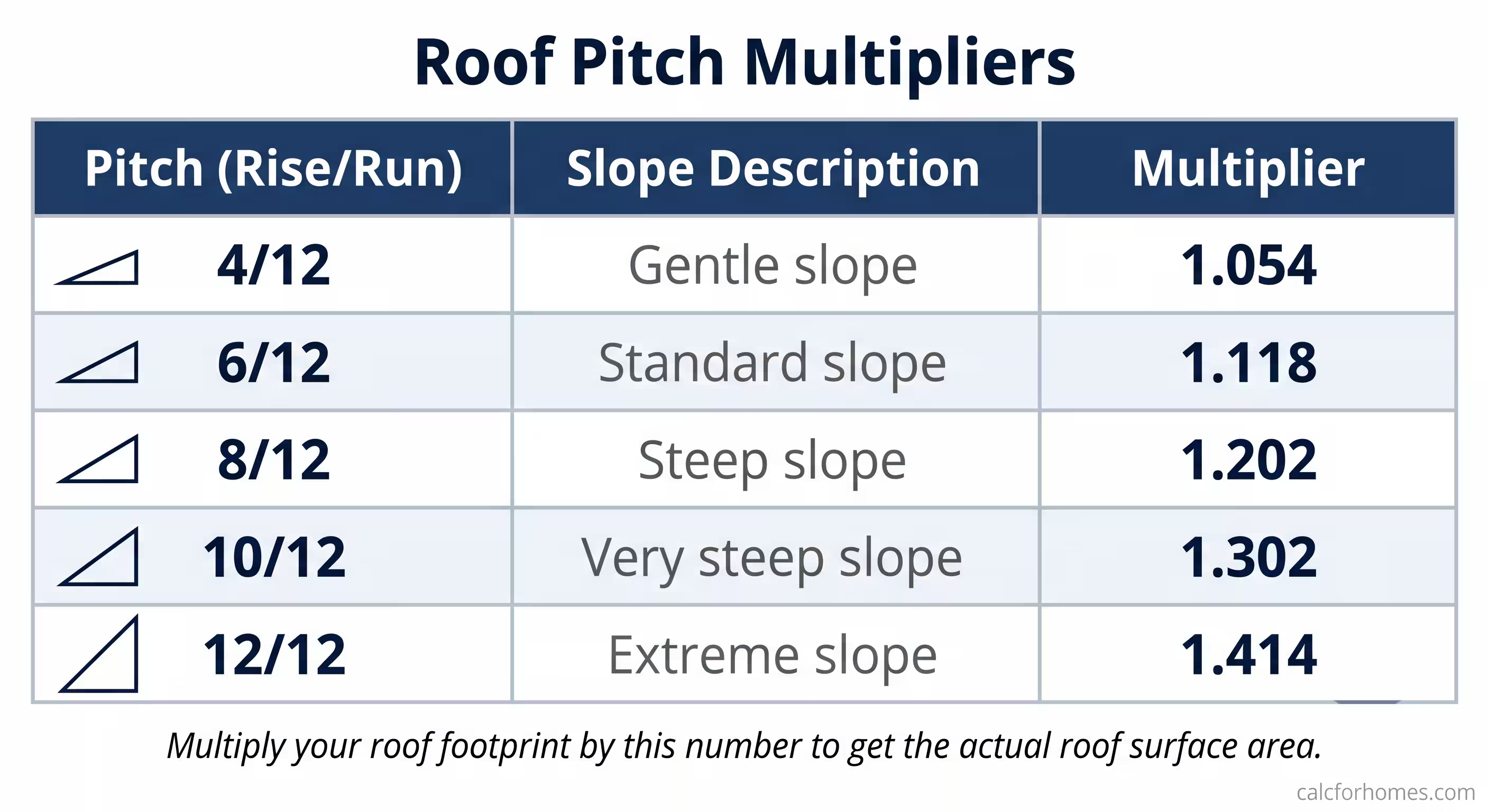
Roof pitch is the vertical rise per 12 inches of horizontal run, expressed as a ratio (a 6/12 pitch rises 6 inches over 12 inches of horizontal distance). A flat roof footprint equals the actual roof area. A sloped roof footprint always measures less, which is why the pitch multiplier converts footprint into true surface area.
| Pitch (Rise/Run) | Pitch Multiplier | Visual Description |
|---|---|---|
| 4/12 | 1.054 | Gentle slope, walkable |
| 6/12 | 1.118 | Standard residential pitch |
| 8/12 | 1.202 | Steep, requires harness |
| 10/12 | 1.302 | Very steep, professional only |
| 12/12 | 1.414 | Extreme 45 degree slope |
Worked example: a 1,500 sq ft footprint with a 6/12 pitch produces 1,677 actual sq ft (1,500 × 1.118 = 1,677). For a 2,000 sq ft footprint with an 8/12 pitch, the calculation produces 2,404 sq ft (2,000 × 1.202 = 2,404). Apply the multiplier that matches your pitch so you don't underorder shingles.
How to measure different roof shapes
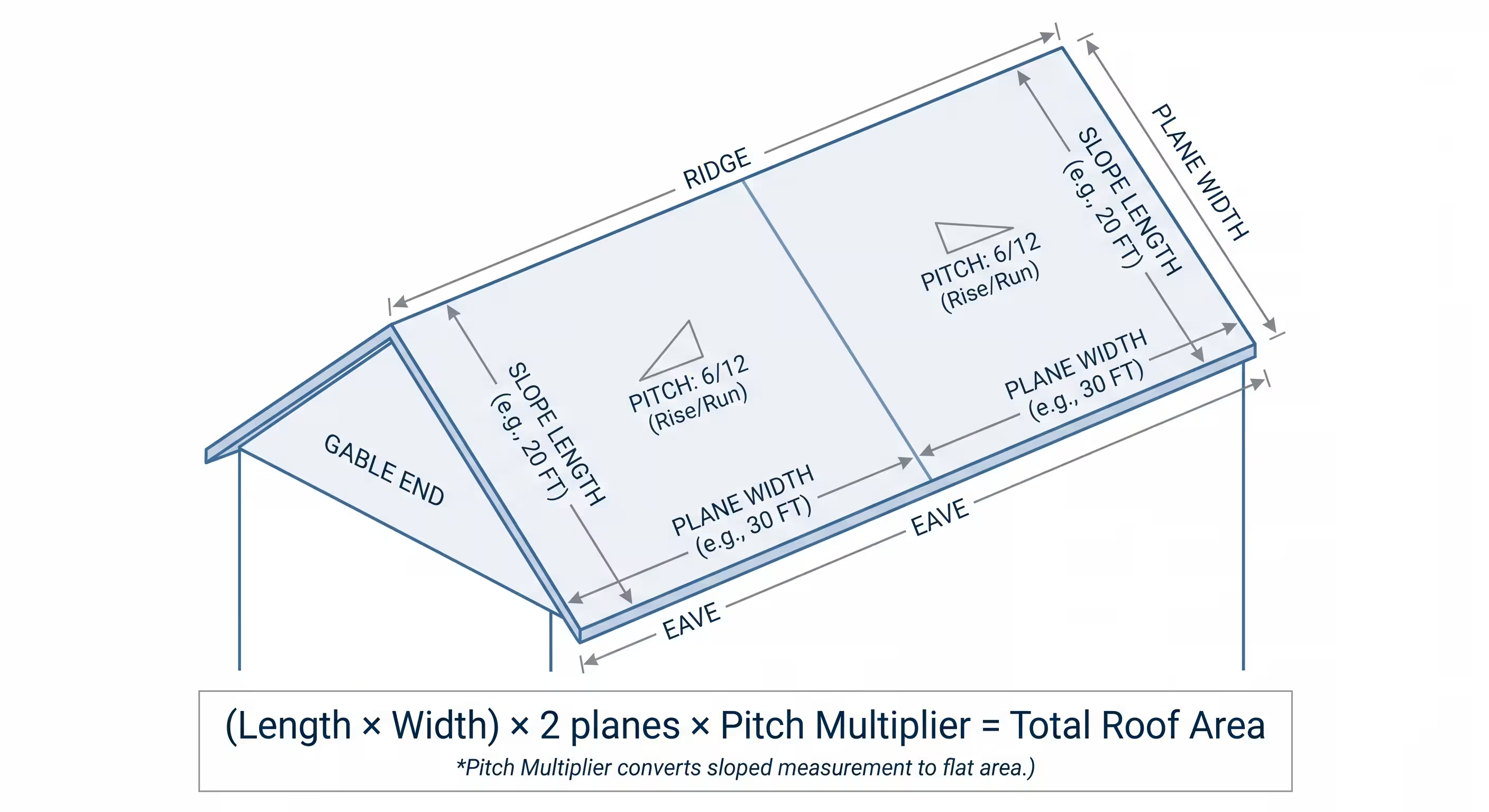
Roof shape determines how many planes you measure and which formulas you apply. The 4 most common residential shapes (gable, hip, mansard, and flat) each use a different measurement approach.
Gable roof
A gable roof has 2 rectangular planes that meet at a central ridge. Measure the length (eave to eave) and width (eave to ridge) of one plane, multiply for area, then double the result for total roof area. Common error: forgetting to include gable end overhangs, which can reduce the estimate by 3 to 5 percent.
Hip roof
A hip roof has 4 planes, typically 2 trapezoid sides and 2 triangular ends. Calculate trapezoid area with the formula ((a + b) / 2) × h, where a and b are the parallel sides and h is the height. Calculate triangle area with (base × height) / 2. Common error: measuring the trapezoid as a rectangle, which overstates the area by 10 to 15 percent.
Mansard roof
A mansard roof has 4 planes split into 2 layers (an upper near-flat section and a lower steep section). Measure each layer separately because the steep lower section often uses a different pitch multiplier (12/12 or steeper) than the upper section (2/12 or 4/12). Common error: applying a single pitch multiplier to both layers, which produces an error of 8 to 12 percent.
Flat roof
A flat roof footprint equals the actual roof area because no pitch multiplier applies. Drainage slopes (typically 1/4 inch per foot) add less than 0.5 percent to the area and remain ignorable for material ordering. For a simple flat roof, treat it as a basic rectangle and use our square footage calculator to get the area in seconds, no pitch multiplier needed.
What to do with your roof measurement
Once you have measured each plane and applied the pitch multiplier, you have the actual roof area in square feet. The next step is converting that number into the materials you order: roofing squares, shingle bundles, underlayment rolls, and a waste factor for cuts and overlap.
Plug your total square footage into our roofing calculator to get a full material list. The list includes the 10 to 15 percent waste factor most installers add to every quote, including GAF and Owens Corning certified contractors.
Common mistakes when measuring a roof
Six common mistakes throw off roof measurements and lead to material shortages or budget overruns.
- Forgetting the pitch multiplier. Multiplying footprint without the pitch factor underestimates roof area by 5 to 41 percent depending on slope.
- Measuring footprint and calling it roof area. Ground footprint is the shadow of the roof, not its surface. A sloped roof always covers more area than its footprint.
- Skipping overhangs and dormers. Overhangs add 12 to 24 inches per side, and dormers can add 50 to 150 sq ft per unit on complex rooflines.
- Not measuring each plane separately on hip or complex roofs. A single averaged measurement can throw your estimate off by hundreds of dollars on hip, mansard, and gambrel configurations.
- Adding waste factor twice. Some homeowners add a 10 percent waste factor to the area, then select a calculator that adds another 10 percent automatically, doubling the buffer.
- Trusting Google Maps pixel measurement without pitch. Satellite images show footprint only. Without the pitch multiplier, the result undercounts the actual roof by 5 to 41 percent.
DIY measurement is reliable for budgeting. For the final material order, have a contractor verify the count, or use our roofing calculator to prevent costly shortages.
Roof square footage reference by home size
The table below gives quick estimates for 6 common home sizes, assuming a 6/12 pitch and a simple gable roof. Your actual roof may vary by 10 to 20 percent depending on shape and overhangs, so use this reference for early budgeting only.
| Home Footprint (sq ft) | Roof Pitch | Estimated Roof Area (sq ft) | Roofing Squares |
|---|---|---|---|
| 1,000 | 6/12 | 1,118 | 11.2 |
| 1,500 | 6/12 | 1,677 | 16.8 |
| 2,000 | 6/12 | 2,236 | 22.4 |
| 2,500 | 6/12 | 2,795 | 28.0 |
| 3,000 | 6/12 | 3,354 | 33.5 |
| 3,500 | 6/12 | 3,913 | 39.1 |
One roofing square equals 100 sq ft of roof surface. Shingle manufacturers like GAF, Owens Corning, and CertainTeed use this unit for packaging and pricing.