
Most Common Roofing Materials
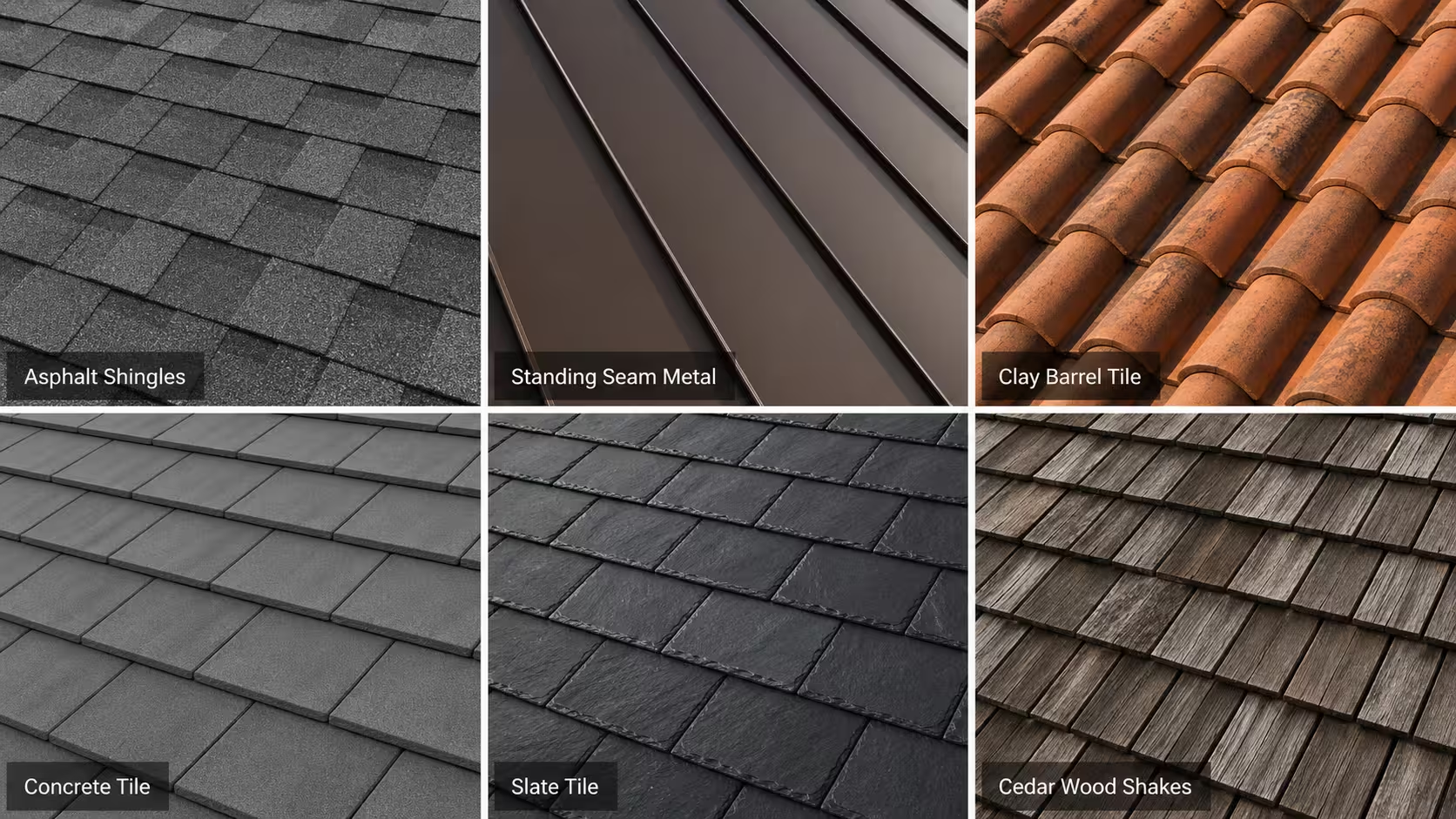
The most common roofing materials are asphalt shingles ($4 to $7 per sq ft, 20 to 30 years), metal ($8 to $14 per sq ft, 40 to 70 years), clay tile ($10 to $18 per sq ft, 50+ years), and slate ($15 to $30 per sq ft, 75 to 100 years). Choose based on budget, climate, and home style. Concrete tile and wood shake fill the remaining 6% to 8% of the residential market, according to the 2024 NAHB Builder Practices Survey.
The 6 main roofing materials installed on US homes include:
- Asphalt shingles: fiberglass mat with asphalt and mineral granules, sold in 3 tab and architectural styles.
- Metal roofing: steel, aluminum, copper, or zinc panels, sold as standing seam or stamped shingle profiles.
- Clay tile: kiln fired terracotta, common on Mediterranean and Spanish style homes.
- Concrete tile: cement based tiles that mimic clay or slate at a 30% lower cost.
- Slate: natural quarried stone, the longest lasting residential roofing material.
- Wood shake: hand split cedar or redwood shakes that age to a silver gray patina.
Roofing Materials Comparison Table (Cost, Lifespan, Durability)
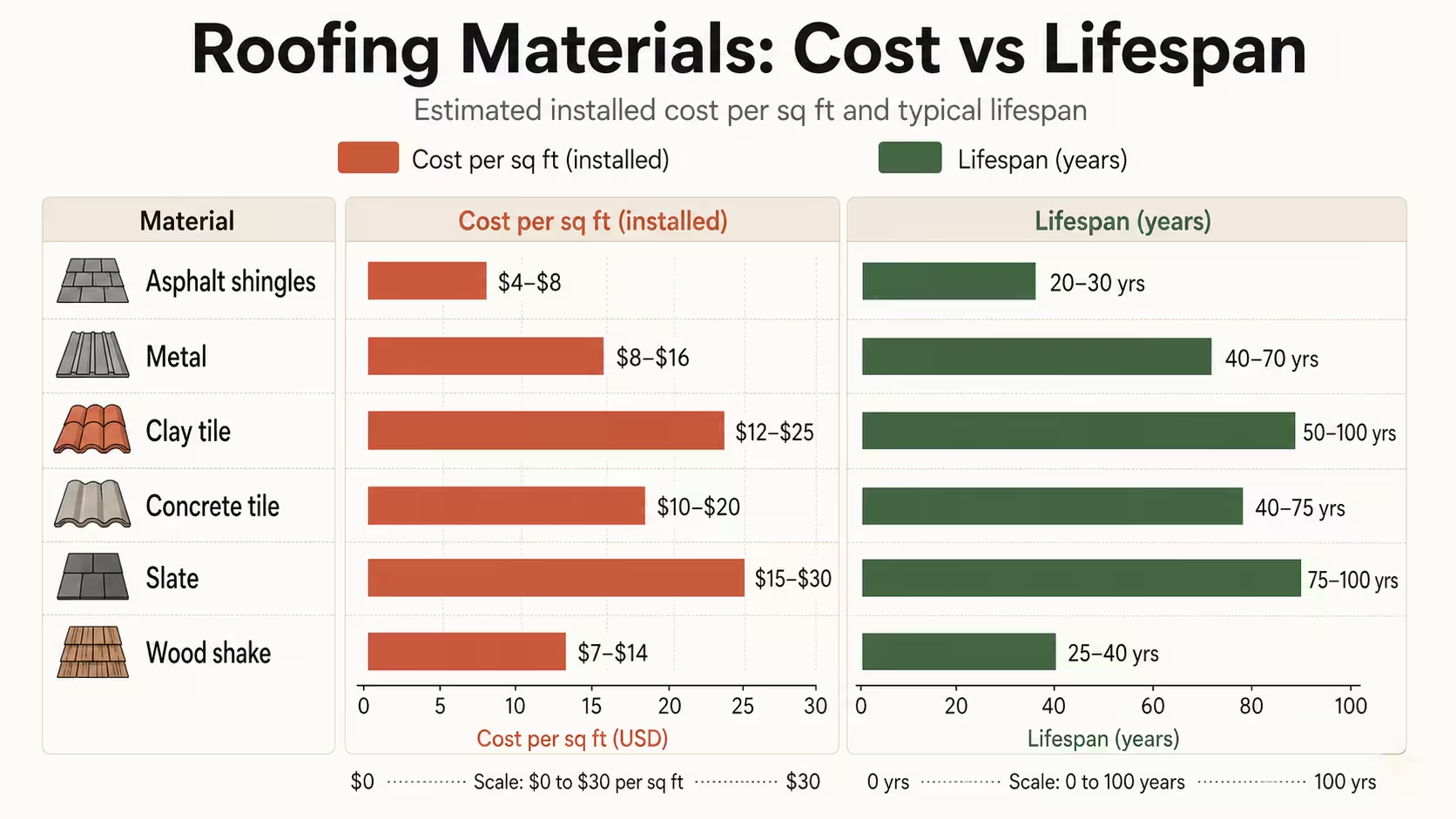
The table below compares the 6 main roofing materials across cost per square foot, lifespan, weight, fire rating, and best climate fit. All cost figures reflect installed pricing for a typical 2,000 sq ft roof in 2026.
| Material | Cost per Sq Ft (Installed) | Lifespan | Weight (lbs/sq ft) | Fire Rating | Best For |
|---|---|---|---|---|---|
| Asphalt Shingles | $4 to $7 | 20 to 30 years | 2 to 4 | Class A (architectural) | Most US climates, budget projects |
| Metal Roofing | $8 to $14 | 40 to 70 years | 1 to 3 | Class A | Snow loads, wildfire zones, coastal |
| Clay Tile | $10 to $18 | 50+ years | 9 to 12 | Class A | Hot, dry, sunny climates |
| Concrete Tile | $7 to $12 | 50 years | 9 to 12 | Class A | Hot climates, moderate budgets |
| Slate | $15 to $30 | 75 to 100 years | 8 to 10 | Class A | Historic homes, cold climates |
| Wood Shake | $7 to $13 | 25 to 40 years | 3 to 4 | Class C (untreated) | Mild, dry climates, rustic homes |
Asphalt Shingles vs Metal Roofing
Asphalt shingles cost 50% to 65% less upfront than metal roofing, but metal lasts 2 to 3 times longer and returns 30% to 60% at resale according to Remodeling Magazine's 2025 Cost vs Value Report. A 2,000 sq ft asphalt roof costs $8,000 to $14,000 installed, while the same metal roof costs $16,000 to $28,000. Metal panels reflect 40% to 70% of solar radiation, which lowers cooling bills by 10% to 25% per the Department of Energy.
Architectural asphalt shingles dominate first time replacements because they install in 1 to 3 days and use standard tools, including pneumatic nailers and utility knives. Standing seam metal needs specialized crews and 2 to 4 days of installation. Use the asphalt shingle calculator to estimate bundles and waste factor for an asphalt project, or the metal roof calculator to price a steel or aluminum upgrade.
| Criterion | Asphalt Shingles | Metal Roofing |
|---|---|---|
| Upfront Cost (2,000 sq ft) | $8,000 to $14,000 | $16,000 to $28,000 |
| Lifespan | 20 to 30 years | 40 to 70 years |
| Energy Efficiency | Standard absorption | Reflects 40% to 70% of solar heat |
| Noise During Rain | Low | Moderate (with proper underlayment) |
| Resale Value (ROI) | 60% to 68% | 61% to 85% |
| Recyclability | 11 million tons landfill yearly (EPA) | 100% recyclable |
Clay Tile vs Slate Roofing
Clay tile and slate are the 2 longest lasting residential roofing materials, with clay reaching 50+ years and slate lasting 75 to 100 years. Both materials weigh 8 to 12 lbs per square foot, which is 3 to 4 times heavier than asphalt, and require structural reinforcement before installation. A licensed structural engineer must verify that the existing rafters and trusses meet the International Residential Code (IRC) Section R802 load requirements.
Clay tile suits hot, dry climates such as Arizona, Southern California, and Florida, where it cools homes by allowing air circulation under each tile. Slate performs in cold, snowy regions, including New England and the Upper Midwest, because it resists freeze thaw cycles and absorbs less than 0.4% water by weight per ASTM C406 standards.
Estimating tile is not like estimating shingles — pieces are sold individually, weights are 3 to 4 times higher, and underlayment is usually doubled. Use the tile roof calculator to get the exact tile count, hip and ridge pieces, batten linear feet, and total deck load before you commit to a tile re-roof.
| Criterion | Clay Tile | Slate |
|---|---|---|
| Cost per Sq Ft (Installed) | $10 to $18 | $15 to $30 |
| Lifespan | 50+ years | 75 to 100 years |
| Weight (lbs/sq ft) | 9 to 12 | 8 to 10 |
| Best Climate | Hot, dry, sunny | Cold, snowy, historic regions |
| Aesthetic | Mediterranean, Spanish | Victorian, Tudor, colonial |
| Structural Reinforcement | Required for most homes | Required for most homes |
Wood Shake, Synthetic, and Specialty Roofing Materials
There are 4 specialty roofing categories: wood shake, synthetic slate, solar shingles, and green roofs. Each serves a niche use case and costs 20% to 200% more than standard asphalt.
Wood Shake
Cedar and redwood shakes cost $7 to $13 per square foot installed and last 25 to 40 years in mild climates. Many homeowners associations (HOAs) prohibit untreated wood shake, and California Building Code Chapter 7A bans Class C wood roofs in wildfire prone Wildland Urban Interface (WUI) zones.
Synthetic Slate
Polymer composite tiles by manufacturers including DaVinci Roofscapes and Brava Roof Tile cost $9 to $14 per square foot and replicate natural slate at 25% the weight. They carry a Class A fire rating and 50 year warranties.
Solar Shingles
Tesla Solar Roof and GAF Energy Timberline Solar integrate photovoltaic cells into roofing tiles. Installed cost runs $21 to $25 per square foot, and federal tax credits (Section 25D) cover 30% through 2032.
Green Roofs
Vegetative roofs cost $15 to $25 per square foot and reduce stormwater runoff by 50% to 90% per the EPA. They suit flat or low slope commercial roofs and select residential applications in cities including Portland, Chicago, and Washington DC.
How to Choose the Right Roofing Material for Your Home
Follow these 6 steps to select the roofing material that fits your budget, climate, and home style.
- Set your budget for the full installed cost, including labor (50% to 60% of total), materials, underlayment, flashing, and 10% to 15% waste factor.
- Match the climate by selecting Class A fire rated metal or tile in wildfire zones, snow rated metal or slate in regions with 40+ inch annual snowfall, and impact rated shingles (UL 2218 Class 4) in hail prone states such as Texas, Oklahoma, and Colorado.
- Check structural capacity with a licensed engineer if you plan to install clay tile, concrete tile, or slate, since these add 600 to 1,200 lbs per 100 sq ft.
- Factor in HOA and local code restrictions, including bans on wood shake in WUI zones and color or profile requirements in historic districts.
- Compare lifecycle cost by dividing total installed cost by expected lifespan. Asphalt at $5 per sq ft over 25 years equals $0.20 per sq ft per year, while slate at $22 over 90 years equals $0.24 per sq ft per year.
- Calculate exact quantities with the roofing calculator to confirm bundles, squares, and total project cost before signing a contract.
Once you've picked a material, use the roof replacement cost calculator to get side by side estimates across asphalt, metal, tile, and slate, including labor, underlayment, and waste factor.
Roofing Material Cost by Roof Size
The table below shows total installed cost ranges for 4 common home sizes. Figures include materials, labor, tear off of 1 existing layer, and standard underlayment for a roof with average pitch (4/12 to 6/12) and minimal complexity.
| Home Size (sq ft) | Asphalt Shingles | Metal Roofing | Clay or Concrete Tile | Slate |
|---|---|---|---|---|
| 1,500 sq ft | $6,000 to $10,500 | $12,000 to $21,000 | $10,500 to $27,000 | $22,500 to $45,000 |
| 2,000 sq ft | $8,000 to $14,000 | $16,000 to $28,000 | $14,000 to $36,000 | $30,000 to $60,000 |
| 2,500 sq ft | $10,000 to $17,500 | $20,000 to $35,000 | $17,500 to $45,000 | $37,500 to $75,000 |
| 3,000 sq ft | $12,000 to $21,000 | $24,000 to $42,000 | $21,000 to $54,000 | $45,000 to $90,000 |
Roof complexity adds 20% to 50% to these figures. Hip roofs, dormers, valleys, and skylights increase labor hours and waste. For an accurate roof measurement, see how to calculate roofing squares.
Roofing Materials by Climate Zone
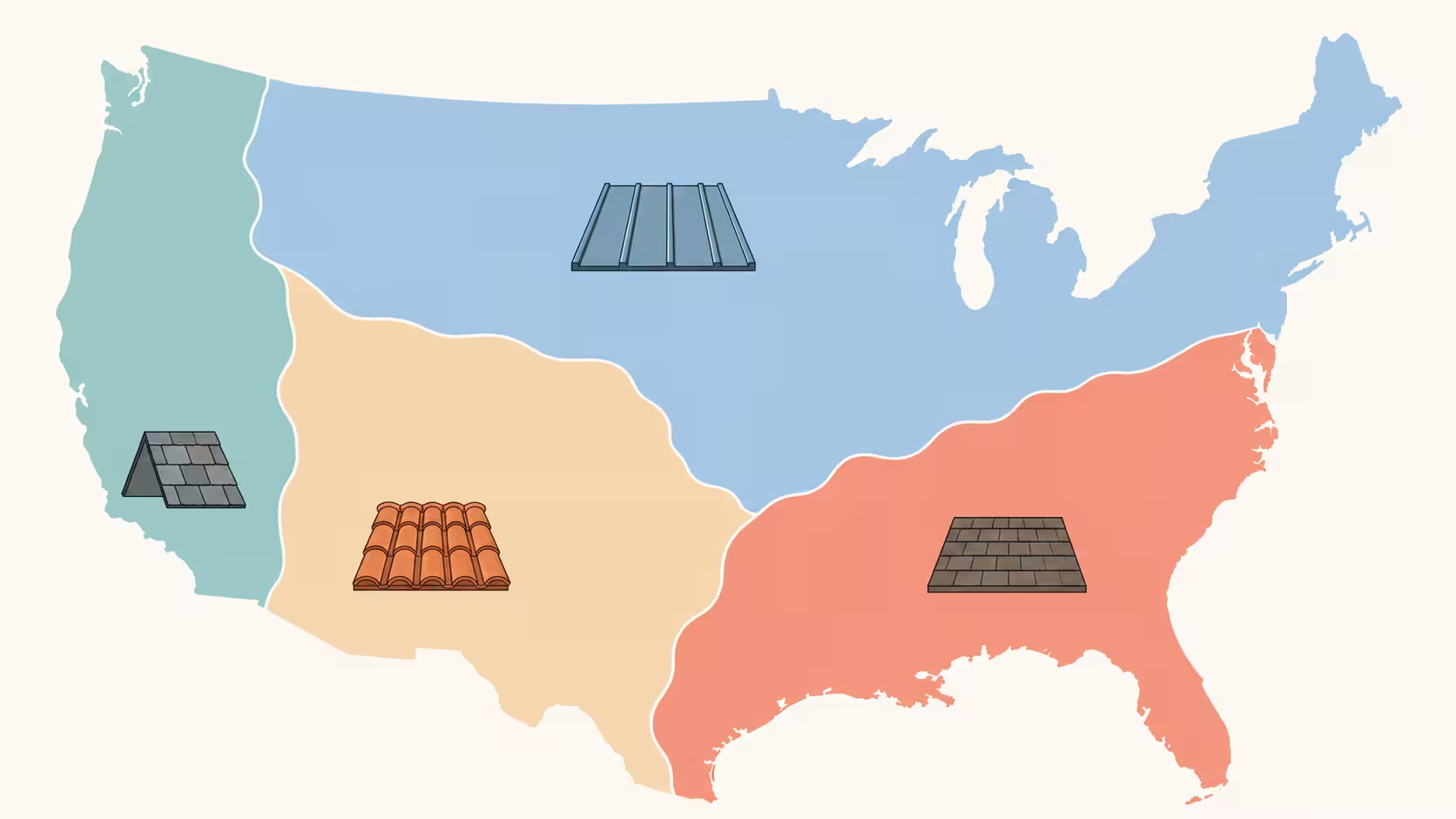
The table below matches roofing materials to 4 climate zones based on data from the International Energy Conservation Code (IECC) and FEMA building science guidance.
| Climate Zone | Recommended Materials | Avoid | Why |
|---|---|---|---|
| Hot and Humid (Florida, Gulf Coast) | Clay tile, concrete tile, metal, cool roof asphalt | Untreated wood shake, dark asphalt | Reflective surfaces lower cooling load by 10% to 25%, and mold resistance is critical |
| Cold and Snowy (New England, Upper Midwest) | Slate, standing seam metal, architectural asphalt | Flat tile, low slope membranes | Snow shedding capability and freeze thaw resistance prevent ice dams |
| Coastal (Atlantic, Pacific shorelines) | Aluminum metal, concrete tile, impact rated asphalt | Steel without coastal coating, copper near salt spray | Salt corrosion resistance and 130+ mph wind ratings (ASTM D7158 Class H) |
| Wildfire Prone (California WUI, Western states) | Class A metal, clay tile, Class A asphalt | Wood shake, untreated synthetic | California Building Code Chapter 7A mandates Class A assemblies |