
Every home improvement project (roofing, flooring, tile, drywall, decking) loses a predictable share of material to cuts, breakage, pattern alignment, and installer errors. The waste factor is how the construction industry handles that loss: a percentage buffer added to the base quantity before purchase. Licensed contractors, trade groups like the National Association of Home Builders (NAHB), and DIY calculators all use this buffer to prevent mid-project shortages and budget overruns.
What Does Waste Factor Mean?
A waste factor means the additional quantity of material, expressed as a percentage, that contractors and homeowners add to a base square footage calculation before ordering. The extra amount covers losses during installation: cuts, breakage, pattern alignment, and installer mistakes. The typical range sits between 5% and 20%, though 10% to 15% fits most residential projects like roof replacements, hardwood floor installs, and tile backsplashes.
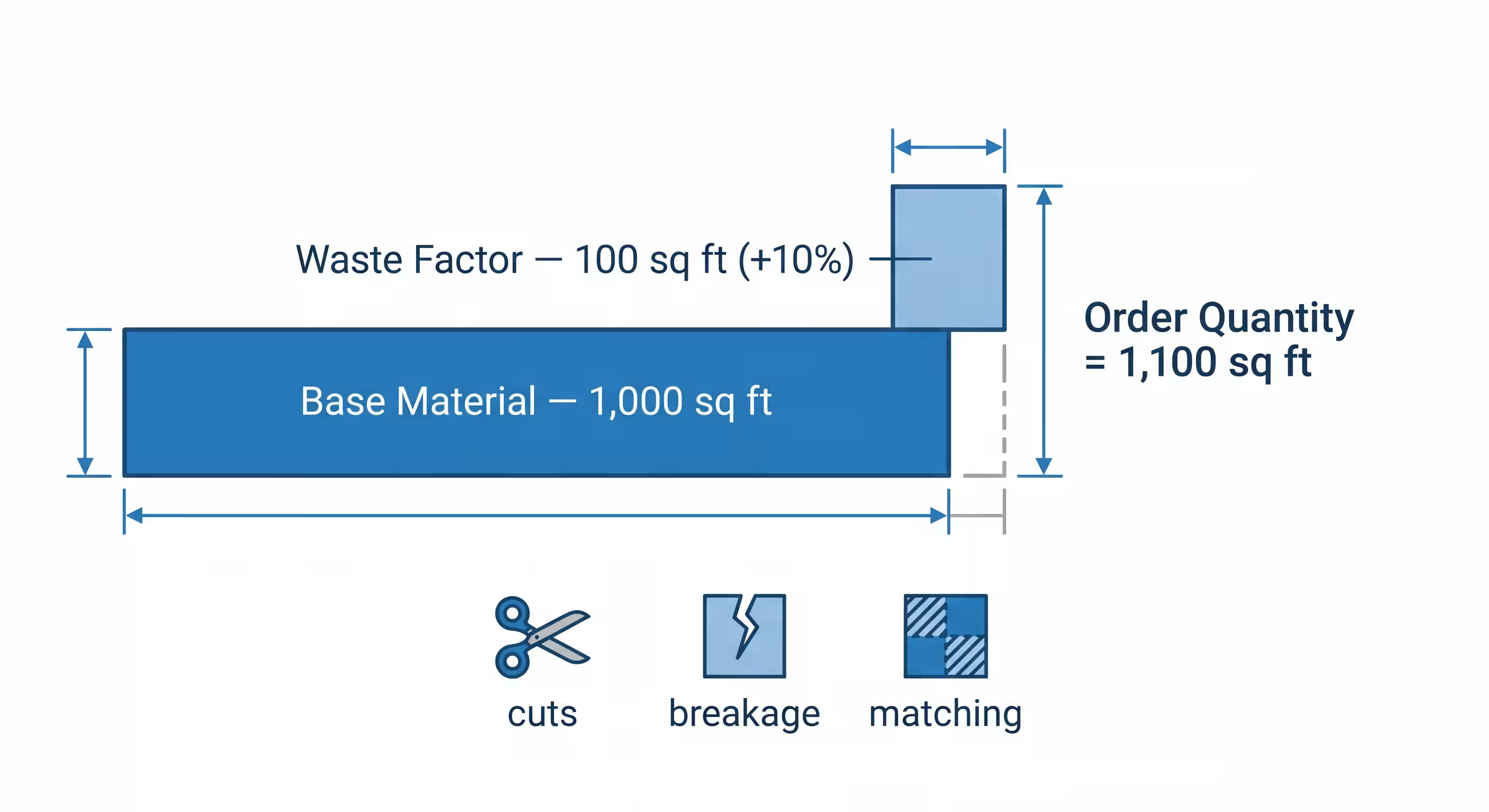
The term "waste" is misleading because most of this material is not actually discarded. A 12-foot plank cut to fit an 11-foot wall leaves a 1-foot piece that counts as waste factor material even though the longer piece did its job. Scraps go to future repairs, remnants fill closets, and offcuts work for transitions. Industry bodies like the Tile Council of North America (TCNA) and the National Wood Flooring Association (NWFA) treat the waste factor as necessary surplus, not disposable excess.
Why Do You Add a Waste Factor to Your Project?
The 5 main reasons you add a waste factor to any home improvement project are cuts, breakage, pattern matching, installer mistakes, and future repairs. Each source produces a predictable percentage of loss. Without that buffer, the project runs short before completion.
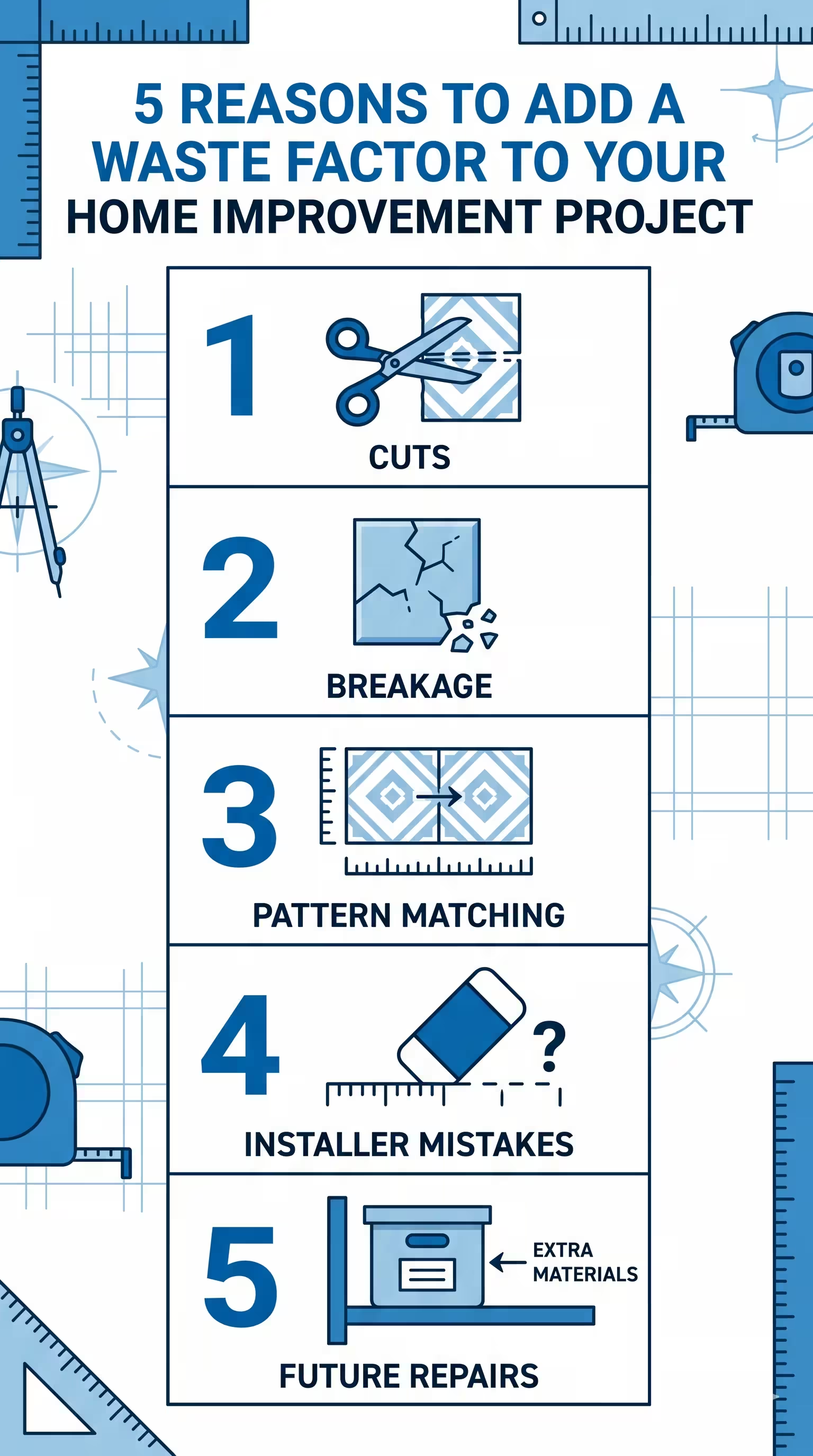
- Cuts: Offcuts that cannot be reused in the main installation, like a 6-inch tile cut from a 12-inch tile to finish a row. Flooring, tile, and drywall projects lose 3% to 8% from cuts alone, depending on room geometry and installer skill.
- Breakage: Damage during shipping, handling, and cutting, especially with fragile materials like porcelain tile, slate, and laminate planks. Installers at Home Depot and Lowe's report that 2% to 5% of ceramic and porcelain tile arrives damaged or cracks during cutting.
- Pattern matching: Wallpaper, patterned vinyl, hardwood flooring, and tile with repeating motifs lose more material to alignment. A herringbone or diagonal layout adds 5% to 10% over straight-lay because the ends of each row produce diagonal offcuts.
- Installer mistakes: Wrong cuts, misaligned planks, and measurement errors. DIY projects add 5% to 10% on top of professional installation rates because DIY installers lack the precision tools and experience of certified contractors.
- Future repairs: Leftover material to replace damaged sections months or years later. Keeping 5% of the original order protects against dye-lot mismatches, since manufacturers like Shaw, Mohawk, and Daltile produce limited batch runs whose colors drift between production dates.
What Happens If You Don't Add a Waste Factor?
Skipping the waste factor produces 6 concrete consequences that raise the total project cost and delay completion. Short orders force a second purchase, and the second order rarely matches the first batch in color, size, or availability.
- Project halt: Material runs out mid-installation, leaving an uneven floor, half-tiled wall, or exposed subfloor for days or weeks until replacement arrives.
- Second purchase cost: Delivery fees, minimum order charges, and reordering time stack up. Big-box retailers (Home Depot, Lowe's, Floor & Decor) charge $79 to $150 for standard delivery on flooring and tile orders.
- Dye-lot mismatch: Visible color variation between the first and second order. Manufacturers print batch numbers on tile and flooring cartons because colors drift between production runs, and no warranty covers this variance if boxes come from different batches.
- Discontinued product risk: A product no longer in catalog cannot be reordered at all. Flooring lines and tile patterns cycle out every 12 to 24 months, so a second purchase 3 weeks later often finds the exact product unavailable.
- Shipping and delay cost: Shipping charges, expedited freight, and contractor downtime compound the loss. Licensed contractors typically charge $300 to $600 per day for scheduled crew time, even when material delays pause work.
- Installer wait time: A delayed floor installation pushes back baseboard, paint, and appliance work, and the delay cascades across the full renovation.
How Big Is a Typical Waste Factor?
A typical waste factor ranges from 5% to 20%, with most residential projects sitting between 10% and 15%. The exact percentage depends on the material category, the installation pattern, and the shape of the room or roof.
| Material Category | Typical Waste Factor Range |
|---|---|
| Roofing shingles | 10% to 15% |
| Flooring (hardwood, laminate, vinyl) | 5% to 15% |
| Tile (ceramic, porcelain, stone) | 10% to 20% |
| Drywall | 10% |
| Decking | 10% to 15% |
The ranges above reflect averages published by trade groups like the National Wood Flooring Association (NWFA), the Tile Council of North America (TCNA), and the Asphalt Roofing Manufacturers Association (ARMA). For the exact percentage to use for your specific material, see our waste factor guide.
What Affects How Much Waste Factor You Need?
The 5 primary factors that raise or lower the required waste factor are room shape, pattern complexity, installer experience, material fragility, and project size. Each factor shifts the percentage by 2% to 10% in either direction.
- Room or roof shape: Irregular shapes with bays, dormers, valleys, and angles produce 3% to 8% more waste than rectangular rooms or simple gable roofs because cuts multiply at every corner and transition.
- Pattern complexity: Diagonal, herringbone, and mosaic patterns add 5% to 10% over straight-lay installations because the end of every row produces a diagonal offcut that cannot be reused in the next row.
- Installer experience: DIY installations add 5% to 10% over professional work by crews certified through organizations like the Certified Flooring Installers (CFI) association, since certified installers cut more precisely and plan layouts to minimize loss.
- Material fragility: Fragile materials (porcelain tile, thin laminate, natural stone) break more often during cutting and handling, so they need 3% to 7% extra compared to durable materials like vinyl plank and composite decking.
- Project size: Small projects push the waste factor higher than large projects because minimum order units (cartons, bundles, squares) create unavoidable surplus. A 50 square feet tile project often rounds up to a full carton, which makes the effective waste factor 20%+ even if the material itself only calls for 10%.
Is the Waste Factor Included in a Contractor's Estimate?
Professional contractors typically include a waste factor between 10% and 15% in their material estimate, but not always. Always ask the contractor to confirm "includes waste factor" in writing on the quote, because a bid missing this line item underestimates material by 10% or more and the homeowner absorbs the difference.
General contractors licensed through state boards like the California Contractors State License Board (CSLB) and the Texas Department of Licensing and Regulation (TDLR) follow standard industry practice and bake waste into quotes, while handymen and unlicensed installers sometimes quote net material only. For DIY projects, the homeowner adds the waste factor directly to the purchase order. If you are comparing a contractor's quote against a DIY estimate, run the numbers on your roof job through our roofing calculator to verify whether the bid includes the typical 10% to 15% buffer.
Waste Factor in Cost Estimates
The waste factor raises the material cost of a project by the same percentage applied to quantity. Budgets that omit the waste factor run 10% to 15% over the initial estimate. According to data compiled by the NAHB, that is the single most common source of residential project overruns.
The formula for adjusted material cost is:
Formula: Adjusted Material Cost = Material Cost × (1 + Waste %)
For example, a $1,000 base material cost with a 10% waste factor becomes $1,000 × 1.10 = $1,100. A $2,500 tile order at 15% waste becomes $2,500 × 1.15 = $2,875. For a worked example on a flooring project with square feet inputs, see our flooring calculator, which applies the waste factor to both square footage and total cost in a single quantity output.
Knowing what a waste factor is matters less than knowing how much to add for your specific material. The right percentage for shingles is not the same as the right percentage for diagonal tile or laminate flooring. For material-by-material percentages on roofing, flooring, drywall, tile, and decking, see our waste factor guide.